

 https://doi.org/10.4081/cc.2026.15918
Cervical musculoskeletal comorbidities in migraine patients
All claims expressed in this article are solely those of the authors and do not necessarily represent those of their affiliated organizations, or those of the publisher, the editors and the reviewers. Any product that may be evaluated in this article or claim that may be made by its manufacturer is not guaranteed or endorsed by the publisher.
Accepted: 28 April 2026
Published: 28 May 2026
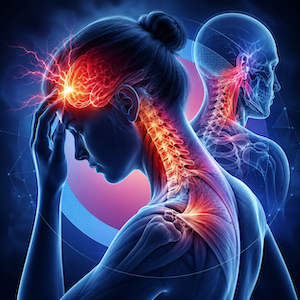
This manuscript provides clinical recommendations for assessing and managing cervical musculoskeletal (MSK) comorbidities in patients with migraine. It explores the reciprocal influences between migraine and the cervical MSK system and proposes a theoretical model to explain the high prevalence of these comorbidities, emphasizing the need for proper assessment and targeted management. The text provides a detailed explanation of tests commonly used in clinical and research settings to identify cervical MSK involvement. Furthermore, it reports reference cut-off values to help clinicians profile patients based on the presence and relevance of these comorbidities. The role of neck pain in guiding the execution and interpretation of cervical MSK assessment is discussed in detail. These findings require careful clinical reasoning and an individualized understanding of their roles in each patient’s presentation. Finally, the manuscript presents therapeutic guidelines for the effective management of cervical MSK comorbidities in the migraine population.
Downloads
1. Goadsby PJ, Holland PR, Martins-Oliveira M, Hoffmann J, Schankin C, Akerman S. Pathophysiology of migraine: A disorder of sensory processing. Physiol Rev 2017;97:553-622. DOI: https://doi.org/10.1152/physrev.00034.2015
2. GBD 2016 Disease and Injury Incidence and Prevalence Collaborators. Global, regional, and national incidence, prevalence, and years lived with disability for 328 diseases and injuries for 195 countries, 1990-2016: a systematic analysis for the Global Burden of Disease Study 2016. Lancet 2017;390:1211-59. Erratum in: Lancet 2017;390:e38.
3. Steiner TJ, Stovner LJ, Vos T, Jensen R, Katsarava Z. Migraine is first cause of disability in under 50s: will health politicians now take notice? J Headache Pain 2018;19:17. DOI: https://doi.org/10.1186/s10194-018-0846-2
4. Ashina M, Buse DC, Ashina H, Pozo-Rosich P, Peres MFP, Lee MJ, et al. Migraine: integrated approaches to clinical management and emerging treatments. Lancet 2021;397:1505-18. DOI: https://doi.org/10.1016/S0140-6736(20)32342-4
5. Ashina M. Migraine. Ropper AH, ed. N Engl J Med 2020;383:1866-76. DOI: https://doi.org/10.1056/NEJMra1915327
6. Goadsby PJ, Silberstein SD, Yeung PP, Cohen JM, Ning X, Yang R, Dodick DW. Long-term safety, tolerability, and efficacy of fremanezumab in migraine A randomized study. Neurology 2020;95:E2487-99. DOI: https://doi.org/10.1212/WNL.0000000000010600
7. Wallasch TM, Angeli A, Kropp P. Outcomes of a headache-specific cross-sectional multidisciplinary treatment program. Headache 2012;52:1094-105. DOI: https://doi.org/10.1111/j.1526-4610.2012.02189.x
8. Zeeberg P, Olesen J, Jensen R. Efficacy of multidisciplinary treatment in a tertiary referral headache centre. Cephalalgia 2005;25:1159-67. DOI: https://doi.org/10.1111/j.1468-2982.2005.00980.x
9. Onan D, Ekizoğlu E, Arıkan H, Taşdelen B, Özge A, Martelletti P. The Efficacy of Physical Therapy and Rehabilitation Approaches in Chronic Migraine: A Systematic Review and Meta-Analysis. J Integr Neurosci 2023;22:126. DOI: https://doi.org/10.31083/j.jin2205126
10. Beier D, Callesen HE, Carlsen LN, Birkefoss K, Tómasdóttir H, Wűrtzen H, et al. Manual joint mobilisation techniques, supervised physical activity, psychological treatment, acupuncture and patient education in migraine treatment. A systematic review and meta-analysis. Cephalalgia 2022;42:63-72. DOI: https://doi.org/10.1177/03331024211034489
11. Reina‐Varona Á, Madroñero‐Miguel B, Fierro‐Marrero J, Paris‐Alemany A, La Touche R. Efficacy of various exercise interventions for migraine treatment: A systematic review and network meta‐analysis. Headache 2024;64:873-900. DOI: https://doi.org/10.1111/head.14696
12. Sarchielli P, Granella F, Prudenzano MP, Pini LA, Guidetti V, Bono G, et al. Italian guidelines for primary headaches: 2012 revised version. J Headache Pain 2012;13:S31-70. DOI: https://doi.org/10.1007/s10194-012-0437-6
13. Di Antonio S, Arendt-Nielsen L, Castaldo M. Cervical musculoskeletal impairments and pain sensitivity in migraine patients. Musculoskelet Sci Pract 2023;66:102817. DOI: https://doi.org/10.1016/j.msksp.2023.102817
14. Di Antonio S, Arendt-Nielsen L, Ponzano M, Bovis F, Torelli P, Finocchi C, Castaldo M. Profiling migraine patients according to clinical and psychophysical characteristics: a cluster analysis approach. Pain Med 2023;24:1046-57. DOI: https://doi.org/10.1093/pm/pnad048
15. Liang Z, Thomas L, Jull G, Minto J, Zareie H, Treleaven J. Neck pain associated with migraine does not necessarily reflect cervical musculoskeletal dysfunction. Headache 2021;61:882-94. DOI: https://doi.org/10.1111/head.14136
16. Di Antonio S, Arendt-Nielsen L, Ponzano M, Bovis F, Torelli P, Elisa P, et al. Profiling migraine patients according to clinical and psychophysical characteristics: clinical validity of distinct migraine clusters. Neurol Sci 2024;45:1185-200. DOI: https://doi.org/10.1007/s10072-023-07118-8
17. Basedau H, Nielsen T, Asmussen K, Gloss K, Mehnert J, Jensen RH, May A. Experimental evidence of a functional relationship within the brainstem trigeminocervical complex in humans. Pain 2022;163:729-34. DOI: https://doi.org/10.1097/j.pain.0000000000002417
18. Bartsch T, Goadsby PJ. The Trigeminocervical Complex and Migraine: Current Concepts and Synthesis. Curr Pain Headache Rep 2003;7:371-6. DOI: https://doi.org/10.1007/s11916-003-0036-y
19. Katsarava Z, Lehnerdt G, Duda B, Ellrich J, Diener HC, Kaube H. Sensitization of trigeminal nociception specific for migraine but not pain of sinusitis. Neurology 2002;59:1450-3. DOI: https://doi.org/10.1212/WNL.59.9.1450
20. Hodges PW, Tucker K. Moving differently in pain: a new theory to explain the adaptation to pain. Pain 2011;152:S90-8. DOI: https://doi.org/10.1016/j.pain.2010.10.020
21. Scholten-Peeters GGM, Coppieters MW, Durge TSC, Castien RF. Fluctuations in local and widespread mechanical sensitivity throughout the migraine cycle: A prospective longitudinal study. J Headache Pain 2020;21:16. DOI: https://doi.org/10.1186/s10194-020-1083-z
22. Di Antonio S, Castaldo M, Ponzano M, Bovis F, Hugo Villafañe J, Torelli P, et al. Trigeminal and cervical sensitization during the four phases of the migraine cycle in patients with episodic migraine. Headache 2022;62:176-90. DOI: https://doi.org/10.1111/head.14261
23. Bakke M, Tfelt-Hansen P, Olesen J, Møller E. Action of some pericranial muscles during provoked attacks of common migraine. Pain 1982;14:121-35. DOI: https://doi.org/10.1016/0304-3959(82)90093-8
24. Clifford T, Lauritzen M, Bakke M, Olesen J, Møller E. Electromyography of pericranial muscles during treatment of spontaneous common migraine attacks. Pain 1982;14:137-47. DOI: https://doi.org/10.1016/0304-3959(82)90094-X
25. Hatef B, Talebian S, Hashemirad F, Ghaffarpour M. Effect of pain on the timing pattern of masseter muscle activity during the open-close-clench cycle in the migraine without aura and tension type headaches. Iran J Neurol 2012;11:146-50.
26. Di Antonio S, Arendt-Nielsen L, Ponzano M, Bovis F, Torelli P, Finocchi C, Castaldo M. Cervical musculoskeletal impairments in the 4 phases of the migraine cycle in episodic migraine patients. Cephalalgia 2022;42:827-45. DOI: https://doi.org/10.1177/03331024221082506
27. Carvalho GF, Luedtke K, Szikszay TM, Bevilaqua-Grossi D, May A. Muscle endurance training of the neck triggers migraine attacks. Cephalalgia 2021;41:383-91. DOI: https://doi.org/10.1177/0333102420970184
28. Florencio LL, de Oliveira AS, Carvalho GF, Tolentino Gde A, Dach F, Bigal ME, et al. Cervical Muscle Strength and Muscle Coactivation During Isometric Contractions in Patients With Migraine: A Cross-Sectional Study. Headache 2015;55:1312-22. DOI: https://doi.org/10.1111/head.12644
29. Tolentino GA, Bevilaqua-Grossi D, Carvalho GF, Carnevalli APO, Dach F, Florencio LL. Relationship Between Headaches and Neck Pain Characteristics With Neck Muscle Strength. J Manipulative Physiol Ther 2018;41:650-7. DOI: https://doi.org/10.1016/j.jmpt.2018.04.003
30. Rosignoli C, Ornello R, Onofri A, Caponnetto V, Grazzi L, Raggi A, et al. Applying a biopsychosocial model to migraine: rationale and clinical implications. J Headache Pain 2022;23:100. DOI: https://doi.org/10.1186/s10194-022-01471-3
31. Pensri C, Liang Z, Treleaven J, Jull G, Thomas L. Cervical musculoskeletal impairments in migraine and tension-type headache and relationship to pain related factors: An updated systematic review and meta-analysis. Musculoskelet Sci Pract 2025;76:103251. DOI: https://doi.org/10.1016/j.msksp.2024.103251
32. Fernández-De-Las-Peñas C, Cuadrado ML, Pareja JA. Myofascial trigger points, neck mobility and forward head posture in unilateral migraine. Cephalalgia 2006;26:1061-70. DOI: https://doi.org/10.1111/j.1468-2982.2006.01162.x
33. Florencio LL, Ferracni GN, Chaves TC, Palacios-Ceña M, Ordás-Bandera CM, Speciali JG, et al. Analysis of Head Posture and Activation of the Cervical Neck Extensors During a Low-Load Task in Women With Chronic Migraine and Healthy Participants. J Manipulative Physiol Ther 2018;41:762-70. DOI: https://doi.org/10.1016/j.jmpt.2018.07.002
34. Castaldo M, Arendt-Nielsen L, Di Antonio S. A clinical guide for physiotherapists to assess and manage cervical musculoskeletal impairment and pain sensitivity in migraine patients. J Man Manip Ther 2025;33:412-29. DOI: https://doi.org/10.1080/10669817.2025.2502804
35. Garrett TR, Youdas JW, Madson TJ. Reliability of measuring forward head posture in a clinical setting. J Orthop Sports Phys Ther 1993;17:155-60. DOI: https://doi.org/10.2519/jospt.1993.17.3.155
36. Lee CH, Lee S, Shin G. Reliability of forward head posture evaluation while sitting, standing, walking and running. Hum Mov Sci 2017;55:81-6. DOI: https://doi.org/10.1016/j.humov.2017.07.008
37. Rodríguez-Sanz J, Carrasco-Uribarren A, Cabanillas-Barea S, Hidalgo-García C, Fanlo-Mazas P, Lucha-López MO, Tricás-Moreno JM. Validity and reliability of two Smartphone applications to measure the lower and upper cervical spine range of motion in subjects with chronic cervical pain. J Back Musculoskelet Rehabil 2019;32:619-27. DOI: https://doi.org/10.3233/BMR-181260
38. Oliveira-Souza AIS, Carvalho GF, Florêncio LL, Fernández-de-Las-Peñas C, Dach F, Bevilaqua-Grossi D. Intrarater and Interrater Reliability of the Flexion Rotation Test and Cervical Range of Motion in People With Migraine. J Manipulative Physiol Ther 2020;43:874-81. DOI: https://doi.org/10.1016/j.jmpt.2019.11.005
39. Pourahmadi MR, Bagheri R, Taghipour M, Takamjani IE, Sarrafzadeh J, Mohseni-Bandpei MA. A new iPhone application for measuring active craniocervical range of motion in patients with non-specific neck pain: a reliability and validity study. Spine J 2018;18:447-57. DOI: https://doi.org/10.1016/j.spinee.2017.08.229
40. Piva SR, Erhard RE, Childs JD, Browder DA. Inter-tester reliability of passive intervertebral and active movements of the cervical spine. Man Ther 2006;11:321-30. DOI: https://doi.org/10.1016/j.math.2005.09.001
41. Fernández-de-las-Peñas C, Downey C, Miangolarra-Page JC. Validity of the lateral gliding test as tool for the diagnosis of intervertebral joint dysfunction in the lower cervical spine. J Manipulative Physiol Ther 2005;28:610-6. DOI: https://doi.org/10.1016/j.jmpt.2005.08.014
42. Van Trijffel E, Anderegg Q, Bossuyt PMM, Lucas C. Inter-examiner reliability of passive assessment of intervertebral motion in the cervical and lumbar spine: A systematic review. Man Ther 2005;10:256-69. DOI: https://doi.org/10.1016/j.math.2005.04.008
43. Jonsson A, Rasmussen-Barr E. Intra- and inter-rater reliability of movement and palpation tests in patients with neck pain: A systematic review. Physiother Theory Pract 2018;34:165-80. DOI: https://doi.org/10.1080/09593985.2017.1390806
44. Dumas JP, Arsenault A, Boudreau G, Magnoux E, Lepage Y, Bellavance A, Loise P. Physical Impairments in Cervicogenic Headache: Traumatic Vs. Nontraumatic Onset. Cephalalgia 2001;21:884-93. DOI: https://doi.org/10.1046/j.1468-2982.2001.00264.x
45. Tali D, Menahem I, Vered E, Kalichman L. Upper cervical mobility, posture and myofascial trigger points in subjects with episodic migraine: Case-control study. J Bodyw Mov Ther 2014;18:569-75. DOI: https://doi.org/10.1016/j.jbmt.2014.01.006
46. Hall TM, Robinson KW, Fujinawa O, Akasaka K, Pyne EA. Intertester Reliability and Diagnostic Validity of the Cervical Flexion-Rotation Test. J Manipulative Physiol Ther 2008;31:293-300. DOI: https://doi.org/10.1016/j.jmpt.2008.03.012
47. Hall TM, Briffa K, Hopper D, Robinson K. Comparative analysis and diagnostic accuracy of the cervical flexion-rotation test. J Headache Pain 2010;11:391-7. DOI: https://doi.org/10.1007/s10194-010-0222-3
48. Di Antonio S, Arendt-Nielsen L, Ponzano M, Bovis F, Torelli P, Pelosin E, et al. Migraine patients with and without neck pain: Differences in clinical characteristics, sensitization, musculoskeletal impairments, and psychological burden. Musculoskelet Sci Pract 2023;66:102800. DOI: https://doi.org/10.1016/j.msksp.2023.102800
49. Bragatto MM, Bevilaqua-Grossi D, Benatto MT, Lodovichi SS, Pinheiro CF, Carvalho GF, et al. Is the presence of neck pain associated with more severe clinical presentation in patients with migraine? A cross-sectional study. Cephalalgia 2019;39:1500-8. DOI: https://doi.org/10.1177/0333102419854061
50. Jørgensen R, Ris I, Falla D, Juul-Kristensen B. Reliability, construct and discriminative validity of clinical testing in subjects with and without chronic neck pain. BMC Musculoskelet Disord 2014;15:408. DOI: https://doi.org/10.1186/1471-2474-15-408
51. Peolsson A, Almkvist C, Dahlberg C, Lindqvist S, Pettersson S. Age- and Sex-Specific Reference Values of a Test of Neck Muscle Endurance. J Manipulative Physiol Ther 2007;30:171-7. DOI: https://doi.org/10.1016/j.jmpt.2007.01.008
52. Juul T, Langberg H, Enoch F, Søgaard K. The intra- and inter-rater reliability of five clinical muscle performance tests in patients with and without neck pain. BMC Musculoskelet Disord 2013;14:339. DOI: https://doi.org/10.1186/1471-2474-14-339
53. Getsoian SL, Gulati SM, Okpareke I, Nee RJ, Jull GA. Validation of a clinical examination to differentiate a cervicogenic source of headache: a diagnostic prediction model using controlled diagnostic blocks. BMJ Open 2020;10:e035245. DOI: https://doi.org/10.1136/bmjopen-2019-035245
54. Schneider GM, Jull G, Thomas K, Smith A, Emery C, Faris P, et al. Intrarater and interrater reliability of select clinical tests in patients referred for diagnostic facet joint blocks in the cervical spine. Arch Phys Med Rehabil 2013;94:1628-34. DOI: https://doi.org/10.1016/j.apmr.2013.02.015
55. Bendtsen L, Jensen R, Jensen N, Olesen J. Pressure-Controlled Palpation: A New Technique Which Increases the Reliability of Manual Palpation. Cephalalgia 1995;15:205-10. DOI: https://doi.org/10.1046/j.1468-2982.1995.015003205.x
56. Castien R, Duineveld M, Maaskant J, De Hertogh W, Scholten-Peeters G. Pericranial Total Tenderness Score in Patients with Tension-type Headache and Migraine. A Systematic Review and Meta-analysis. Pain Physician 2021;24:E1177-89.
57. Fernández-De-Las-Peñas C, Cuadrado ML, Arendt-Nielsen L, Pareja JA. Side-to-side differences in pressure pain thresholds and pericranial muscle tenderness in strictly unilateral migraine. Eur J Neurol 2008;15:162-8. DOI: https://doi.org/10.1111/j.1468-1331.2007.02020.x
58. Fernández-De-Las-Peñas C, Cleland JA, Palomeque-Del-Cerro L, Caminero AB, Guillem-Mesado A, Jiménez-García R. Development of a clinical prediction rule for identifying women with tension-type headache who are likely to achieve short-term success with joint mobilization and muscle trigger point therapy. Headache 2011;51:246-61. DOI: https://doi.org/10.1111/j.1526-4610.2010.01789.x
59. Watson DH, Drummond PD. Head pain referral during examination of the neck in migraine and tension-type headache. Headache 2012;52:1226-35. DOI: https://doi.org/10.1111/j.1526-4610.2012.02169.x
60. Luedtke K, Starke W, May A. Musculoskeletal dysfunction in migraine patients. Cephalalgia 2018;38:865-75. DOI: https://doi.org/10.1177/0333102417716934
61. Luedtke K, May A. Stratifying migraine patients based on dynamic pain provocation over the upper cervical spine. J Headache Pain 2017;18. DOI: https://doi.org/10.1186/s10194-017-0808-0
62. Schwarz A, Ziegeler C, Daneshkhah S, May A, Luedtke K. Predicting the outcome of the greater occipital nerve block – an observational study on migraine patients with and without musculoskeletal cervical impairment. Cephalalgia 2021;41:78-89. DOI: https://doi.org/10.1177/0333102420954518
63. Fernández-de-las-Peñas C, Dommerholt J. International consensus on diagnostic criteria and clinical considerations of myofascial trigger points: A delphi study. Pain Med 2018;19:142-50. DOI: https://doi.org/10.1093/pm/pnx207
64. Mayoral del Moral O, Torres Lacomba M, Russell IJ, Sánchez Méndez Ó, Sánchez Sánchez B. Validity and reliability of clinical examination in the diagnosis of myofascial pain syndrome and myofascial trigger points in upper quarter muscles. Pain Med 2018;19:2039-50. DOI: https://doi.org/10.1093/pm/pnx315
65. Castaldo M, Arendt-Nielsen L, Ponzano M, Bovis F, Torelli P, Finocchi C, Di Antonio S. Cut-Off Values Able to Identify Migraine Patients With Increased Pressure-Pain Sensitivity Independent of the Migraine Cycle Through a Single Assessment: A Secondary Analysis of a Multicentre, Cross-Sectional, Observational Study. Eur J Pain 2025;29:e4787. DOI: https://doi.org/10.1002/ejp.4787
66. Rolke R, Baron R, Maier C, Tölle TR, Treede DR, Beyer A, et al. Quantitative sensory testing in the German Research Network on Neuropathic Pain (DFNS): standardized protocol and reference values. Pain 2006;123:231-43. DOI: https://doi.org/10.1016/j.pain.2006.01.041
67. Al-Khazali HM, Krøll LS, Ashina H, Melo-Carrillo A, Burstein R, Amin FM, Ashina S. Neck pain and headache: Pathophysiology, treatments and future directions. Musculoskelet Sci Pract 2023:102804. DOI: https://doi.org/10.1016/j.msksp.2023.102804
68. Liang Z, Thomas L, Jull G, Treleaven J. The temporal behaviour of migraine related neck pain does not inform on the origin of neck pain: An observational study. Musculoskelet Sci Pract 2022;58. DOI: https://doi.org/10.1016/j.msksp.2022.102522
69. Lampl C, Rudolph M, Deligianni CI, Mitsikostas DD. Neck pain in episodic migraine: premonitory symptom or part of the attack? J Headache Pain 2015;16. DOI: https://doi.org/10.1186/s10194-015-0566-9
70. Liang Z, Thomas L, Jull G, Treleaven J. Subgrouping individuals with migraine associated neck pain for targeted management. Musculoskelet Sci Pract 2023;66:102801. DOI: https://doi.org/10.1016/j.msksp.2023.102801
71. Rodrigues A, Florencio LL, Martins J, Bragatto MM, Fernández-de-Las-Penãs C, Dach F, Bevilaqua-Grossi D. Craniocervical flexion test in patients with migraine: Discriminative validity and accuracy. Int J Clin Pract 2021;75:e14248. DOI: https://doi.org/10.1111/ijcp.14248
72. Hvedstrup J, Kolding LT, Ashina M, Schytz HW. Increased neck muscle stiffness in migraine patients with ictal neck pain: A shear wave elastography study. Cephalalgia 2020;40:565-74. DOI: https://doi.org/10.1177/0333102420919998
73. Blomgren J, Strandell E, Jull G, Vikman I, Röijezon U. Effects of deep cervical flexor training on impaired physiological functions associated with chronic neck pain: a systematic review. BMC Musculoskelet Disord 2018;19:415. DOI: https://doi.org/10.1186/s12891-018-2324-z
74. Altmis Kacar H, Ozkul C, Baran A, Guclu-Gunduz A. Effects of cervical stabilization training in patients with headache: A single-blinded randomized controlled trial. Eur J Pain 2024;28:633-48. DOI: https://doi.org/10.1002/ejp.2208
75. Ghanbari A, Askarzadeh S, Petramfar P, Mohamadi M. Migraine responds better to a combination of medical therapy and trigger point management than routine medical therapy alone. NeuroRehabilitation 2015;37:157-63. DOI: https://doi.org/10.3233/NRE-151248
76. Cardoso R, Seixas A, Rodrigues S, Moreira-Silva I, Ventura N, Azevedo J, Monsignori F. The effectiveness of Sustained Natural Apophyseal Glide on Flexion Rotation Test, pain intensity, and functionality in subjects with Cervicogenic Headache: A Systematic Review of Randomized Trials. Arch Physiother 2022;12:20. DOI: https://doi.org/10.1186/s40945-022-00144-3
77. Olesiejuk M, Chalimoniuk M, Sacewicz T. Myofascial trigger points therapy increases neck mobility and reduces headache pain in migraine patients – pilot study. BMC Musculoskelet Disord 2025;26. DOI: https://doi.org/10.1186/s12891-025-08360-1
78. Gandolfi M, Geroin C, Valè N, Marchioretto F, Turrina A, Dimitrova E, et al. Does myofascial and trigger point treatment reduce pain and analgesic intake in patients undergoing onabotulinumtoxinA injection due to chronic intractable migraine? Eur J Phys Rehabil Med 2018;54:1-12. DOI: https://doi.org/10.23736/S1973-9087.17.04568-3
79. Rezaeian T, Mosallanezhad Z, Nourbakhsh MR, Ahmadi M, Nourozi M. The Impact of Soft Tissue Techniques in the Management of Migraine Headache: A Randomized Controlled Trial. J Chiropr Med 2019;18:243-52. DOI: https://doi.org/10.1016/j.jcm.2019.12.001
80. Bevilaqua-Grossi D, Gonçalves MC, Carvalho GF, Florencio LL, Dach F, Speciali JG, et al. Additional Effects of a Physical Therapy Protocol on Headache Frequency, Pressure Pain Threshold, and Improvement Perception in Patients With Migraine and Associated Neck Pain: A Randomized Controlled Trial. Arch Phys Med Rehabil 2016;97:866-74. DOI: https://doi.org/10.1016/j.apmr.2015.12.006
81. Jafari M, Bahrpeyma F, Togha M, Hall T, Vahabizad F, Jafari E. Can upper cervical manual therapy affect the blink reflex in subjects with migraine and neck pain? J Man Manip Ther 2024;32:190-7. DOI: https://doi.org/10.1080/10669817.2023.2250172
82. Watson DH, Drummond PD. Cervical referral of head pain in migraineurs: Effects on the nociceptive blink reflex. Headache 2014;54:1035-45. DOI: https://doi.org/10.1111/head.12336
83. Benatto MT, Florencio LL, Bragatto MM, Dach F, Fernández-de-las-Peñas C, Bevilaqua-Grossi D. Neck-specific strengthening exercise compared with placebo sham ultrasound in patients with migraine: a randomized controlled trial. BMC Neurol 2022;22:126. DOI: https://doi.org/10.1186/s12883-022-02650-0
84. Deodato M, Granato A, Buoite Stella A, Martini M, Marchetti E, Lise I, et al. Efficacy of a dual task protocol on neurophysiological and clinical outcomes in migraine: a randomized control trial. Neurol Sci 2024;45:4015-26. DOI: https://doi.org/10.1007/s10072-024-07611-8
85. Wanderley D, Valença MM, de Souza Costa Neto JJ, Martins JV, Raposo MCF, de Oliveira DA. Contract-relax technique compared to static stretching in treating migraine in women: A randomized pilot trial. J Bodyw Mov Ther 2020;24:43-9. DOI: https://doi.org/10.1016/j.jbmt.2019.05.023
86. Tolentino GA, Florencio LL, Pradela J, Pinheiro-Araújo CF, Martins J, de Cassia Cabral Norato A, et al. Effects of combining manual therapies, neck muscle exercises, and therapeutic education pain neuroscience in patients with migraine: a 3-armed randomized clinical trial. Musculoskelet Sci Pract 2025;78:103360. DOI: https://doi.org/10.1016/j.msksp.2025.103360
87. Meise R, Carvalho GF, Thiel C, Luedtke K. Additional effects of pain neuroscience education combined with physiotherapy on the headache frequency of adult patients with migraine: A randomized controlled trial. Cephalalgia 2023;43:033310242211447. DOI: https://doi.org/10.1177/03331024221144781
How to Cite

This work is licensed under a Creative Commons Attribution-NonCommercial 4.0 International License.
PAGEPress has chosen to apply the Creative Commons Attribution NonCommercial 4.0 International License (CC BY-NC 4.0) to all manuscripts to be published.