
 https://doi.org/10.4081/cc.2026.15921
To feed or to fast? Nutritional triggers in migraine: a narrative review
All claims expressed in this article are solely those of the authors and do not necessarily represent those of their affiliated organizations, or those of the publisher, the editors and the reviewers. Any product that may be evaluated in this article or claim that may be made by its manufacturer is not guaranteed or endorsed by the publisher.
Published: 23 June 2026
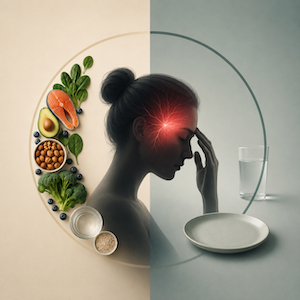
Background: Migraine attacks typically emerge in predisposed individuals after exposure to heterogeneous stimuli that vary widely across patients. A system-level perspective highlights migraine as a disturbance of homeostasis and allostasis: the brain integrates multiple inputs and generates adaptive responses to maintain physiological stability, but sustained physiological or paraphysiological stressors may impose excessive allostatic load. When compensatory mechanisms become energetically costly or insufficient, an “allostatic reset” may occur, clinically manifesting as a migraine attack. Within this framework, the concept of a migraine trigger is better viewed as a threshold modulator rather than a deterministic cause, i.e., a stimulus that lowers the attack threshold in susceptible individuals. Nutrition is among the most frequently implicated domains, including fasting, dehydration, specific foods and additives, and overall dietary patterns.
Methods: This narrative review synthesizes current evidence on dietary exposures as potential migraine precipitants and modulators of disease course.
Results: The most frequently reported food-related triggers include fasting, dehydration, alcohol, coffee and caffeine withdrawal, chocolate, milk and dairy products, processed and cured meats rich in nitrites and nitrates, citrus fruits, tea, onions, tomatoes, ice cream, nuts, spicy foods, and ultra-processed foods. Food additives such as monosodium glutamate, aspartame, sulfites, and other artificial sweeteners have also been repeatedly implicated, alongside dietary histamine and biogenic amines. Importantly, several studies suggest that overall dietary patterns, characterized by high glycemic load, irregular meal timing, excessive sugar and saturated fat intake, or ultra-processed foods, may exert a greater influence on migraine susceptibility than single food items.
Conclusions: Overall, the literature is fragmented and often contradictory, with a frequent mismatch between patient-reported triggers and results from blinded challenge studies, underscoring the roles of recall bias, expectancy effects, and prodromal symptoms (e.g., food cravings) misattributed to causation. Inter- and intra-individual variability – shaped by genetic background, metabolic state, gut-brain axis mechanisms, and comorbidities – suggests that “one-size-fits-all” dietary restrictions are inappropriate. Rather than endorsing broad exclusion lists, current evidence supports personalized trigger identification and prioritization of protective dietary patterns, regular hydration, and consistent meal timing to reduce attack susceptibility and overall disease burden.
Downloads
1. Versijpt J, Paemeleire K, Reuter U, MaassenVanDenBrink A. Calcitonin gene-related peptide-targeted therapy in migraine: current role and future perspectives. Lancet 2025;405:1014-26. DOI: https://doi.org/10.1016/S0140-6736(25)00109-6
2. Sebastianelli G, Atalar AÇ, Cetta I, Farham F, Fitzek M, Karatas-Kursun H, et al. Insights from triggers and prodromal symptoms on how migraine attacks start: The threshold hypothesis. Cephalalgia 2024;44:03331024241287224. DOI: https://doi.org/10.1177/03331024241287224
3. Blau JN. Migraine triggers: practice and theory. Pathol Biol (Paris) 1992;40:367-72.
4. Sedley W, Kumar S, Jones S, Levy A, Friston K, Griffiths T, et al. Migraine as an allostatic reset triggered by unresolved interoceptive prediction errors. Neurosci Biobehav Rev 2024;157:105536. DOI: https://doi.org/10.1016/j.neubiorev.2024.105536
5. Borsook D, Maleki N, Becerra L, McEwen B. Understanding Migraine through the Lens of Maladaptive Stress Responses: A Model Disease of Allostatic Load. Neuron 2012;73:219-34. DOI: https://doi.org/10.1016/j.neuron.2012.01.001
6. Kesserwani H. Migraine Triggers: An Overview of the Pharmacology, Biochemistry, Atmospherics, and Their Effects on Neural Networks. Cureus 2021;13:e14243. DOI: https://doi.org/10.7759/cureus.14243
7. Martin VT, Vij B. Diet and Headache: Part 1. Headache 2016;56:1543-52. DOI: https://doi.org/10.1111/head.12953
8. Tu YH, Chang CM, Yang CC, Tsai IJ, Chou YC, Yang CP. Dietary Patterns and Migraine: Insights and Impact. Nutrients 2025;17. DOI: https://doi.org/10.3390/nu17040669
9. Behrouz V, Hakimi E, Mir E. Impact of Dietary Patterns on Migraine Management: Mechanisms of Action and Recent Literature Insights. Brain Behav 2025;15:e70652. DOI: https://doi.org/10.1002/brb3.70652
10. Hufnagl KN, Peroutka SJ. Glucose regulation in headache: implications for dietary management. Expert Rev Neurother 2002;2:311-7. DOI: https://doi.org/10.1586/14737175.2.3.311
11. Finocchi C, Sivori G. Food as trigger and aggravating factor of migraine. Neurol Sci 2012;33:S77-80. DOI: https://doi.org/10.1007/s10072-012-1046-5
12. Kelman L. The triggers or precipitants of the acute migraine attack. Cephalalgia 2007;27:394-402. DOI: https://doi.org/10.1111/j.1468-2982.2007.01303.x
13. Fukui PT, Gonçalves TRT, Strabelli CG, Lucchino NMF, Matos FC, Santos JPM dos, et al. Trigger factors in migraine patients. Arq Neuropsiquiatr 2008;66:494-9. DOI: https://doi.org/10.1590/S0004-282X2008000400011
14. Abu-Salameh I, Plakht Y, Ifergane G. Migraine exacerbation during Ramadan fasting. J Headache Pain 2010;11:513-7. DOI: https://doi.org/10.1007/s10194-010-0242-z
15. Awada A, al Jumah M. The first-of-Ramadan headache. Headache 1999;39:490-3. DOI: https://doi.org/10.1046/j.1526-4610.1999.3907490.x
16. Mosek A, Korczyn AD. Yom Kippur headache. Neurology 1995;45:1953-5. DOI: https://doi.org/10.1212/WNL.45.11.1953
17. Marmura MJ. Triggers, Protectors, and Predictors in Episodic Migraine. Curr Pain Headache Rep 2018;22:81. DOI: https://doi.org/10.1007/s11916-018-0734-0
18. Dalton K. Food intake prior to a migraine attack--study of 2,313 spontaneous attacks. Headache 1975;15:188-93. DOI: https://doi.org/10.1111/j.1526-4610.1975.hed1503188.x
19. Dalkara T, Kiliç K. How does fasting trigger migraine? A hypothesis. Curr Pain Headache Rep 2013;17:368. DOI: https://doi.org/10.1007/s11916-013-0368-1
20. Valente M, Garbo R, Filippi F, Antonutti A, Ceccarini V, Tereshko Y, et al. Migraine Prevention through Ketogenic Diet: More than Body Mass Composition Changes. J Clin Med 2022;11. DOI: https://doi.org/10.3390/jcm11174946
21. Perry BG, Bear TLK, Lucas SJE, Mündel T. Mild dehydration modifies the cerebrovascular response to the cold pressor test. Exp Physiol 2016;101:135-42. DOI: https://doi.org/10.1113/EP085449
22. Ogino Y, Kakeda T, Nakamura K, Saito S. Dehydration enhances pain-evoked activation in the human brain compared with rehydration. Anesth Analg 2014;118:1317-25. DOI: https://doi.org/10.1213/ANE.0b013e3182a9b028
23. Spigt MG, Kuijper EC, Schayck CP, Troost J, Knipschild PG, Linssen VM, et al. Increasing the daily water intake for the prophylactic treatment of headache: a pilot trial. Eur J Neurol 2005;12:715-8. DOI: https://doi.org/10.1111/j.1468-1331.2005.01081.x
24. Spigt M, Weerkamp N, Troost J, van Schayck CP, Knottnerus JA. A randomized trial on the effects of regular water intake in patients with recurrent headaches. Fam Pract 2012;29:370-5. DOI: https://doi.org/10.1093/fampra/cmr112
25. Khorsha F, Mirzababaei A, Togha M, Mirzaei K. Association of drinking water and migraine headache severity. J Clin Neurosci 2020;77:81-4. DOI: https://doi.org/10.1016/j.jocn.2020.05.034
26. Silberstein SD. Migraine symptoms: results of a survey of self-reported migraineurs. Headache 1995;35:387-96. DOI: https://doi.org/10.1111/j.1526-4610.1995.hed3507387.x
27. Balbin JE, Nerenberg R, Baratloo A, Friedman BW. Intravenous fluids for migraine: a post hoc analysis of clinical trial data. Am J Emerg Med 2016;34:713-6. DOI: https://doi.org/10.1016/j.ajem.2015.12.080
28. Jones CW, Remboski LB, Freeze B, Braz VA, Gaughan JP, McLean SA. Intravenous Fluid for the Treatment of Emergency Department Patients With Migraine Headache: A Randomized Controlled Trial. Ann Emerg Med 2019;73:150-6. DOI: https://doi.org/10.1016/j.annemergmed.2018.09.004
29. Arca KN, Halker Singh RB. Dehydration and Headache. Curr Pain Head Rep 2021;25:56. DOI: https://doi.org/10.1007/s11916-021-00966-z
30. Gazerani P. Migraine and Diet. Nutrients 2020;12. DOI: https://doi.org/10.3390/nu12061658
31. Tai MLS, Yap JF, Goh CB. Dietary trigger factors of migraine and tension-type headache in a South East Asian country. J Pain Res 2018;11:1255-61. DOI: https://doi.org/10.2147/JPR.S158151
32. Hindiyeh NA, Zhang N, Farrar M, Banerjee P, Lombard L, Aurora SK. The Role of Diet and Nutrition in Migraine Triggers and Treatment: A Systematic Literature Review. Headache 2020;60:1300-16. DOI: https://doi.org/10.1111/head.13836
33. Vitali-Silva A, Bello VA, Poli-Frederico RC, Oliveira CEC de, Reiche EMV, Bossa BB, et al. Relationship between food triggers and sensory hypersensitivity in patients with migraine. Arq Neuropsiquiatr 2024;82:1-7. DOI: https://doi.org/10.1055/s-0044-1793934
34. Aladdin YS, Alsharif R, Mattar W, Alturki M, Malli IA, Alghamdi Y, et al. Migraine Prevalence and Analysis of Dietary Habits in Relation to Headache in the Female Population: A Single-Center Study From Jeddah, Saudi Arabia. Cureus 2022;14:e24848. DOI: https://doi.org/10.7759/cureus.24848
35. Hajjarzadeh S, Shalilahmadi D, Nikniaz Z, Mahdavi R, Hajjarzadeh S. The comparison of the main dietary and non-dietary trigger factors in women with chronic and episodic migraine. Nutr Diet 2022;79:616-22. DOI: https://doi.org/10.1111/1747-0080.12761
36. Spekker E, Nagy-Grócz G. All Roads Lead to the Gut: The Importance of the Microbiota and Diet in Migraine. Neurol Int 2023;15:1174-90. DOI: https://doi.org/10.3390/neurolint15030073
37. Scharff L, Turk DC, Marcus DA. Triggers of headache episodes and coping responses of headache diagnostic groups. Headache 1995;35:397-403. DOI: https://doi.org/10.1111/j.1526-4610.1995.hed3507397.x
38. Liu X, Yu Y, Hou L, Yu Y, Wu Y, Wu S, et al. Association between dietary habits and the risk of migraine: a Mendelian randomization study. Front Nutr 2023;10:1123657. DOI: https://doi.org/10.3389/fnut.2023.1123657
39. Mollaoglu M. Trigger factors in migraine patients. J Health Popul Nutr 2012;30:370-7.
40. Chądzyński P, Kacprzak A, Domitrz W, Domitrz I. Migraine headache facilitators in a population of Polish women and their association with migraine occurrence - preliminary results. Neurol Neurochir Pol 2019;53:377-83. DOI: https://doi.org/10.5603/PJNNS.a2019.0044
41. Esteves-Mesquita V, Fernández-Cardero Á, Sarriá B, Martín-Cabrejas I. An Assessment of the Dietary Habits of Individuals with Migraine Living in Spain: An Exploratory Observational Cross-Sectional Pilot Study. Nutrients 2025;17:686. DOI: https://doi.org/10.3390/nu17040686
42. Lisicki M, Schoenen J. Old Habits Die Hard: Dietary Habits of Migraine Patients Challenge our Understanding of Dietary Triggers. Front Neurol 2021;12:748419. DOI: https://doi.org/10.3389/fneur.2021.748419
43. Casanova A, Vives-Mestres M, Donoghue S, Mian A, Wöber C. The role of avoiding known triggers, embracing protectors, and adhering to healthy lifestyle recommendations in migraine prophylaxis: Insights from a prospective cohort of 1125 people with episodic migraine. Headache 2023;63:51-61. DOI: https://doi.org/10.1111/head.14451
44. Moffett AM, Swash M, Scott DF. Effect of chocolate in migraine: a double-blind study. J Neurol Neurosurg Psychiatry 1974;37:445-8. DOI: https://doi.org/10.1136/jnnp.37.4.445
45. Marcus DA, Scharff L, Turk D, Gourley LM. A double-blind provocative study of chocolate as a trigger of headache. Cephalalgia 1997;17:855-62. DOI: https://doi.org/10.1046/j.1468-2982.1997.1708855.x
46. Gibb CM, Davies PT, Glover V, Steiner TJ, Clifford Rose F, Sandler M. Chocolate is a migraine-provoking agent. Cephalalgia 1991;11:93-5. DOI: https://doi.org/10.1046/j.1468-2982.1991.1102093.x
47. Dala-Paula BM, Deus VL, Tavano OL, Gloria MBA. In vitro bioaccessibility of amino acids and bioactive amines in 70% cocoa dark chocolate: What you eat and what you get. Food Chem 2021;343:128397. DOI: https://doi.org/10.1016/j.foodchem.2020.128397
48. De Feo M, Paladini A, Ferri C, Carducci A, Del Pinto R, Varrassi G, et al. Anti-Inflammatory and Anti-Nociceptive Effects of Cocoa: A Review on Future Perspectives in Treatment of Pain. Pain Ther 2020;9:231-40. DOI: https://doi.org/10.1007/s40122-020-00165-5
49. Fisher NDL, Hughes M, Gerhard-Herman M, Hollenberg NK. Flavanol-rich cocoa induces nitric-oxide-dependent vasodilation in healthy humans. J Hypertens 2003;21:2281-6. DOI: https://doi.org/10.1097/00004872-200312000-00016
50. Zaeem Z, Zhou L, Dilli E. Dietary triggers in headache and migraine: facts and fiction. Neurol Int 2023;15:73-83.
51. Zugravu C, Otelea MR. Dark Chocolate: To Eat or Not to Eat? A Review. J AOAC Int 2019;102:1388-96. DOI: https://doi.org/10.5740/jaoacint.19-0132
52. Lippi G, Mattiuzzi C, Cervellin G. Chocolate and migraine: the history of an ambiguous association. Acta Biomed 2014;85:216-21. DOI: https://doi.org/10.1155/2014/827635
53. Fayed AGI, Emam H, Abdel-Fattah AN, Shamloul RM, Elkholy TA, Yassen EM, et al. The correlation between the frequent intake of dietary migraine triggers and increased clinical features of migraine (analytical cross-sectional study from Egypt). Sci Rep 2024;14:4150. DOI: https://doi.org/10.1038/s41598-024-54339-8
54. Özön A, Karadaş Ö, Özge A. Efficacy of Diet Restriction on Migraines. Noro Psikiyatr Ars 2018;55:233-7.
55. Rist PM, Buring JE, Kurth T. Dietary patterns according to headache and migraine status: a cross-sectional study. Cephalalgia 2015;35:767-75. DOI: https://doi.org/10.1177/0333102414560634
56. Khafaf DT, Meral Koç B. Epidemiology of Migraines in Iraqi Females: Emphasis on Dietary Influence. Cureus 2023;15:e44080. DOI: https://doi.org/10.7759/cureus.44080
57. Taheri S. Effect of exclusion of frequently consumed dietary triggers in a cohort of children with chronic primary headache. Nutr Health 2017;23:47-50. DOI: https://doi.org/10.1177/0260106016688699
58. Lv X, Zhao S, Ning Z, Zeng H, Shu Y, Tao O, et al. Citrus fruits as a treasure trove of active natural metabolites that potentially provide benefits for human health. Chem Cent J 2015;9:68. DOI: https://doi.org/10.1186/s13065-015-0145-9
59. Lbban E, Ashor A, Shannon OM, Idris I, Siervo M. Is vitamin C a booster of the effects of dietary nitrate on endothelial function? Physiologic rationale and implications for research. Nutrition 2023;109:111995. DOI: https://doi.org/10.1016/j.nut.2023.111995
60. Den Hartogh DJ, Tsiani E. Antidiabetic Properties of Naringenin: A Citrus Fruit Polyphenol. Biomolecules. 2019;9:99. DOI: https://doi.org/10.3390/biom9030099
61. Murugesan N, Woodard K, Ramaraju R, Greenway FL, Coulter AA, Rebello CJ. Naringenin Increases Insulin Sensitivity and Metabolic Rate: A Case Study. J Med Food 2020;23:343-8. DOI: https://doi.org/10.1089/jmf.2019.0216
62. Bailey DG, Malcolm J, Arnold O, Spence JD. Grapefruit juice-drug interactions. Br J Clin Pharmacol 1998;46:101-10. DOI: https://doi.org/10.1046/j.1365-2125.1998.00764.x
63. Kokavec A. Migraine: A disorder of metabolism? Med Hypotheses 2016;97:117-30. DOI: https://doi.org/10.1016/j.mehy.2016.10.029
64. Özön A, Karadaş Ö. The Effectiveness of Diet Restriction in Elderly with Migraine. Noro Psikiyatr Ars 2021;58:217-20. DOI: https://doi.org/10.29399/npa.28024
65. Monteiro JP, Alves MG, Oliveira PF, Silva BM. Structure-Bioactivity Relationships of Methylxanthines: Trying to Make Sense of All the Promises and the Drawbacks. Molecules 2016;21:974. DOI: https://doi.org/10.3390/molecules21080974
66. Zduńska A, Cegielska J, Zduński S, Domitrz I. Caffeine for Headaches: Helpful or Harmful? A Brief Review of the Literature. Nutrients 2023;15:3170. DOI: https://doi.org/10.3390/nu15143170
67. Jin C, Tu S, Sun S, Zhang Z, Wang X. Noncausal effects between tea intake and migraine risk: a Mendelian randomization study. Sci Rep 2023;13:12898. DOI: https://doi.org/10.1038/s41598-023-40171-z
68. Roussos AP, Hirsch AR. Alliaceous migraines. Headache 2014;54:378-82. DOI: https://doi.org/10.1111/head.12091
69. Zhao XX, Lin FJ, Li H, Li HB, Wu DT, Geng F, et al. Recent Advances in Bioactive Compounds, Health Functions, and Safety Concerns of Onion (Allium cepa L.). Front Nutr 2021;8:669805. DOI: https://doi.org/10.3389/fnut.2021.669805
70. Premkumar LS. Transient receptor potential channels as targets for phytochemicals. ACS Chem Neurosci 2014;5:1117-30. DOI: https://doi.org/10.1021/cn500094a
71. Durak-Dados A, Michalski M, Osek J. Histamine and Other Biogenic Amines in Food. J Vet Res 2020;64:281-8. DOI: https://doi.org/10.2478/jvetres-2020-0029
72. Guan LC, Dong X, Green DP. Roles of mast cells and their interactions with the trigeminal nerve in migraine headache. Mol Pain 2023;19:17448069231181358. DOI: https://doi.org/10.1177/17448069231181358
73. Sureda-Gibert P, Romero-Reyes M, Akerman S. Nitroglycerin as a model of migraine: Clinical and preclinical review. Neurobiol Pain 2022;12:100105. DOI: https://doi.org/10.1016/j.ynpai.2022.100105
74. Headache Classification Committee of the International Headache Society (IHS) The International Classification of Headache Disorders, 3rd edition. Cephalalgia 2018;38:1-211. DOI: https://doi.org/10.1177/0333102417738202
75. Bonemazzi I, Pelizza MF, Berti G, Ancona C, Nosadini M, Sartori S, et al. Cold-Stimulus Headache in Children and Adolescents. Life (Basel) 2023;13. DOI: https://doi.org/10.3390/life13040973
76. Panconesi A. Alcohol and migraine: trigger factor, consumption, mechanisms. A review. J Headache Pain 2008;9:19-27. DOI: https://doi.org/10.1007/s10194-008-0006-1
77. Davis-Martin RE, Polk AN, Smitherman TA. Alcohol Use as a Comorbidity and Precipitant of Primary Headache: Review and Meta-analysis. Curr Pain Headache Rep 2017;21:42. DOI: https://doi.org/10.1007/s11916-017-0642-8
78. Vives-Mestres M, Casanova A, Puig X, Ginebra J, Rosen N. Alcohol as a trigger of migraine attacks in people with migraine. Results from a large prospective cohort study in English-speaking countries. Headache 2022;62:1329-38. DOI: https://doi.org/10.1111/head.14428
79. Błaszczyk B, Straburzyński M, Więckiewicz M, Budrewicz S, Niemiec P, Staszkiewicz M, et al. Relationship between alcohol and primary headaches: a systematic review and meta-analysis. J Headache Pain 2023;24:116. DOI: https://doi.org/10.1186/s10194-023-01653-7
80. Venkov CD, Myers PR, Tanner MA, Su M, Vaughan DE. Ethanol increases endothelial nitric oxide production through modulation of nitric oxide synthase expression. Thromb Haemost 1999;81:638-42. DOI: https://doi.org/10.1055/s-0037-1614538
81. Kaewphaleuk T, Watanapa WB, Panich U. Ethanol enhances endothelial ionic currents and nitric oxide release via intermediate-conductance calcium-activated potassium channel. Life Sci 2019;228:21-9. DOI: https://doi.org/10.1016/j.lfs.2019.04.052
82. Nakayama K, Hasegawa H. Blood Vessels as a Key Mediator for Ethanol Toxicity: Implication for Neuronal Damage. Life (Basel) 2022;12:1882. DOI: https://doi.org/10.3390/life12111882
83. Landini L, Souza Monteiro de Araujo D, Chieca M, De Siena G, Bellantoni E, Geppetti P, et al. Acetaldehyde via CGRP receptor and TRPA1 in Schwann cells mediates ethanol-evoked periorbital mechanical allodynia in mice: relevance for migraine. J Biomed Sci 2023;30:28. DOI: https://doi.org/10.1186/s12929-023-00922-6
84. García-Martín E, Martínez C, Serrador M, Alonso-Navarro H, Navacerrada F, Agúndez JAG, et al. Alcohol dehydrogenase 2 genotype and risk for migraine. Headache 2010;50:85-91. DOI: https://doi.org/10.1111/j.1526-4610.2009.01396.x
85. Yokoyama M, Suzuki N, Yokoyama T, Yokoyama A, Funazu K, Shimizu T, et al. Interactions between migraine and tension-type headache and alcohol drinking, alcohol flushing, and hangover in Japanese. J Headache Pain 2012;13:137-45. DOI: https://doi.org/10.1007/s10194-011-0413-6
86. Maxwell CR, Spangenberg RJ, Hoek JB, Silberstein SD, Oshinsky ML. Acetate causes alcohol hangover headache in rats. PLoS One 2010;5:e15963. DOI: https://doi.org/10.1371/journal.pone.0015963
87. Onderwater GLJ, van Oosterhout WPJ, Schoonman GG, Ferrari MD, Terwindt GM. Alcoholic beverages as trigger factor and the effect on alcohol consumption behavior in patients with migraine. Eur J Neurol 2019;26:588-95. DOI: https://doi.org/10.1111/ene.13861
88. Borkum JM. Migraine Triggers and Oxidative Stress: A Narrative Review and Synthesis. Headache 2016;56:12-35. DOI: https://doi.org/10.1111/head.12725
89. Lucerón-Lucas-Torres M, Ruiz-Grao MC, Pascual-Morena C, Priego-Jiménez S, López-González M, Álvarez-Bueno C. Association between wine consumption and migraine: a systematic review and meta-analysis of cross-sectional. Alcohol Alcohol 2025;60:agaf004. DOI: https://doi.org/10.1093/alcalc/agaf004
90. Fagerberg JH, Sjögren E, Bergström CAS. Concomitant intake of alcohol may increase the absorption of poorly soluble drugs. Eur J Pharm Sci 2015;67:12-20. DOI: https://doi.org/10.1016/j.ejps.2014.10.017
91. Fisher SJ, Swaan PW, Eddington ND. The ethanol metabolite acetaldehyde increases paracellular drug permeability in vitro and oral bioavailability in vivo. J Pharmacol Exp Ther 2010;332:326-33. DOI: https://doi.org/10.1124/jpet.109.158642
92. Quartetti U, Brighina F, Gambino G, Frinchi M, Bellafiore M, Tabacchi G, et al. Forecasting migraine attacks by managing daily lifestyle: a systematic review as a basis to develop predictive algorithms. Pain Rep 2025;10:e1247. DOI: https://doi.org/10.1097/PR9.0000000000001247
93. Raucci U, Boni A, Evangelisti M, Della Vecchia N, Velardi M, Ursitti F, et al. Lifestyle Modifications to Help Prevent Headache at a Developmental Age. Front Neurol 2020;11:618375. DOI: https://doi.org/10.3389/fneur.2020.618375
94. Russo A, Bruno A, Trojsi F, Tessitore A, Tedeschi G. Lifestyle Factors and Migraine in Childhood. Curr Pain Headache Rep 2016;20:9. DOI: https://doi.org/10.1007/s11916-016-0539-y
95. Millichap JG, Yee MM. The diet factor in pediatric and adolescent migraine. Pediatr Neurol 2003;28:9-15. DOI: https://doi.org/10.1016/S0887-8994(02)00466-6
96. Charles A. The role of caffeine in headache disorders. Curr Opin Neurol 2024;37:289-94. DOI: https://doi.org/10.1097/WCO.0000000000001249
97. Cappelletti S, Piacentino D, Sani G, Aromatario M. Caffeine: cognitive and physical performance enhancer or psychoactive drug? Curr Neuropharmacol 2015;13:71-88. DOI: https://doi.org/10.2174/1570159X13666141210215655
98. Nowaczewska M, Wiciński M, Kaźmierczak W. The Ambiguous Role of Caffeine in Migraine Headache: From Trigger to Treatment. Nutrients 2020;12. DOI: https://doi.org/10.3390/nu12082259
99. Chen A, Gao L, Chen M, Chen F. Investigating the causal association between coffee and migraine using Mendelian randomization analysis. Neurol Res 2025;47:604-11. DOI: https://doi.org/10.1080/01616412.2025.2495931
100. Zhang J, Liu Y, Xu G, Cao X, Wang W, Zhang D, et al. Causal relationship between coffee intake and neurological diseases: a Mendelian randomization study. Eur J Clin Nutr 2024;78:114-9. DOI: https://doi.org/10.1038/s41430-023-01355-y
101. Zaeem Z, Zhou L, Dilli E. Headaches: a Review of the Role of Dietary Factors. Curr Neurol Neurosci Rep 2016;16:101. DOI: https://doi.org/10.1007/s11910-016-0702-1
102. Lipton RB, Diener HC, Robbins MS, Garas SY, Patel K. Caffeine in the management of patients with headache. J Headache Pain 2017;18:107. DOI: https://doi.org/10.1186/s10194-017-0806-2
103. Cho S, Kim KM, Chu MK. Coffee consumption and migraine: a population-based study. Sci Rep 2024;14:6007. DOI: https://doi.org/10.1038/s41598-024-56728-5
104. Sun-Edelstein C, Mauskop A. Foods and supplements in the management of migraine headaches. Clin J Pain 2009;25:446-52. DOI: https://doi.org/10.1097/AJP.0b013e31819a6f65
105. Zhang L, Yin J, Li J, Sun H, Liu Y, Yang J. Association between dietary caffeine intake and severe headache or migraine in US adults. Sci Rep 2023;13:10220. Erratum in: Sci Rep 2023;13:16391. DOI: https://doi.org/10.1038/s41598-023-36325-8
106. Cha C, Kim O, Pang Y, Jeong H, Lee JE, Lee H, et al. Migraine incidence and coffee consumption among child-bearing age women: the Korea Nurses’ Health Study. Sci Rep 2024;14:12760. DOI: https://doi.org/10.1038/s41598-024-53302-x
107. Liao Z, Lin A, Zeng J, Zou Y, Chen Y, Liu Z, et al. The S-shaped association between dietary caffeine intake and severe headache or migraine: a cross-sectional study based on NHANES. Front Neurol 2025;16:1517942. DOI: https://doi.org/10.3389/fneur.2025.1517942
108. Chen H, Zhang H, Zheng L. No Causal Association Between Coffee Consumption and Risk of Migraine: A Mendelian Randomization Study. Front Genet 2022;13:792313. DOI: https://doi.org/10.3389/fgene.2022.792313
109. Silva-Néto RP, de Almeida Soares A, Augusto Carvalho de Vasconcelos C, da Silva Lopes L. Watermelon and others plant foods that trigger headache in migraine patients. Postgrad Med 2021;133:760-4. DOI: https://doi.org/10.1080/00325481.2021.1922211
110. Cairone F, Fraschetti C, Menghini L, Zengin G, Filippi A, Casadei MA, et al. Effects of Processing on Chemical Composition of Extracts from Sour Cherry Fruits, a Neglected Functional Food. Antioxidants 2023;12:445. DOI: https://doi.org/10.3390/antiox12020445
111. Alpay K, Ertas M, Orhan EK, Ustay DK, Lieners C, Baykan B. Diet restriction in migraine, based on IgG against foods: a clinical double-blind, randomised, cross-over trial. Cephalalgia 2010;30:829-37. DOI: https://doi.org/10.1177/0333102410361404
112. Meents JE, Neeb L, Reuter U. TRPV1 in migraine pathophysiology. Trends Mol Med 2010;16:153-9. DOI: https://doi.org/10.1016/j.molmed.2010.02.004
113. Frias B, Merighi A. Capsaicin, Nociception and Pain. Molecules 2016;21:797. DOI: https://doi.org/10.3390/molecules21060797
114. Chaliha DR, Vaccarezza M, Takechi R, Lam V, Visser E, Drummond P, et al. A Paradoxical Vasodilatory Nutraceutical Intervention for Prevention and Attenuation of Migraine-A Hypothetical Review. Nutrients 2020;12:2487. DOI: https://doi.org/10.3390/nu12082487
115. Bigal ME, Krymchantowski AV. Migraine triggered by sucralose – a case report. Headache 2006;46:515-7. DOI: https://doi.org/10.1111/j.1526-4610.2006.00386_1.x
116. Patel RM, Sarma R, Grimsley E. Popular sweetener sucralose as a migraine trigger. Headache 2006;46:1303-4. DOI: https://doi.org/10.1111/j.1526-4610.2006.00543_1.x
117. Yamaguchi S, Ninomiya K. Umami and Food Palatability. J Nutr 2000;130:921S-6S. DOI: https://doi.org/10.1093/jn/130.4.921S
118. Freeman M. Reconsidering the effects of monosodium glutamate: a literature review. J Am Acad Nurse Pract 2006;18:482-6. DOI: https://doi.org/10.1111/j.1745-7599.2006.00160.x
119. Kwok RH. Chinese-restaurant syndrome. N Engl J Med 1968;278:796. DOI: https://doi.org/10.1056/NEJM196804042781419
120. Beyreuther K, Biesalski HK, Fernstrom JD, Grimm P, Hammes WP, Heinemann U, et al. Consensus meeting: monosodium glutamate - an update. Eur J Clin Nutr 2007;61:304-13. DOI: https://doi.org/10.1038/sj.ejcn.1602526
121. Prawirohardjono W, Dwiprahasto I, Astuti I, Hadiwandowo S, Kristin E, Muhammad M, et al. The administration to Indonesians of monosodium L-glutamate in Indonesian foods: an assessment of adverse reactions in a randomized double-blind, crossover, placebo-controlled study. J Nutr 2000;130:1074S-6S. DOI: https://doi.org/10.1093/jn/130.4.1074S
122. Tarasoff L, Kelly MF. Monosodium L-glutamate: a double-blind study and review. Food Chem Toxicol 1993;31:1019-35. DOI: https://doi.org/10.1016/0278-6915(93)90012-N
123. Geha RS, Beiser A, Ren C, Patterson R, Greenberger PA, Grammer LC, et al. Multicenter, double-blind, placebo-controlled, multiple-challenge evaluation of reported reactions to monosodium glutamate. J Allergy Clin Immunol 2000;106:973-80. DOI: https://doi.org/10.1067/mai.2000.110794
124. Shimada A, Cairns BE, Vad N, Ulriksen K, Pedersen AML, Svensson P, et al. Headache and mechanical sensitization of human pericranial muscles after repeated intake of monosodium glutamate (MSG). J Headache Pain 2013;14:2. DOI: https://doi.org/10.1186/1129-2377-14-2
125. Obayashi Y, Nagamura Y. Does monosodium glutamate really cause headache?: a systematic review of human studies. J Headache Pain 2016;17:54. DOI: https://doi.org/10.1186/s10194-016-0639-4
126. Johns DR. Migraine provoked by aspartame. N Engl J Med 1986;315:456. DOI: https://doi.org/10.1056/NEJM198608143150712
127. Lipton RB, Newman LC, Cohen JS, Solomon S. Aspartame as a dietary trigger of headache. Headache 1989;29:90-2. DOI: https://doi.org/10.1111/j.1526-4610.1989.hed2902090.x
128. Schiffman SS, Buckley CE 3rd, Sampson HA, Massey EW, Baraniuk JN, Follett JV, et al. Aspartame and susceptibility to headache. N Engl J Med 1987;317:1181-5. DOI: https://doi.org/10.1056/NEJM198711053171903
129. Koehler SM, Glaros A. The effect of aspartame on migraine headache. Headache 1988;28:10-4. DOI: https://doi.org/10.1111/j.1365-2524.1988.hed2801010.x
130. Van den Eeden SK, Koepsell TD, Longstreth WT Jr, van Belle G, Daling JR, McKnight B. Aspartame ingestion and headaches: a randomized crossover trial. Neurology 1994;44:1787-93. DOI: https://doi.org/10.1212/WNL.44.10.1787
131. Leon AS, Hunninghake DB, Bell C, Rassin DK, Tephly TR. Safety of long-term large doses of aspartame. Arch Intern Med 1989;149:2318-24. DOI: https://doi.org/10.1001/archinte.1989.00390100120026
132. Henderson WR, Raskin NH. “Hot-dog” headache: individual susceptibility to nitrite. Lancet 1972;2:1162-3. DOI: https://doi.org/10.1016/S0140-6736(72)92591-3
133. Gonzalez A, Hyde E, Sangwan N, Gilbert JA, Viirre E, Knight R. Migraines Are Correlated with Higher Levels of Nitrate-, Nitrite-, and Nitric Oxide-Reducing Oral Microbes in the American Gut Project Cohort. mSystems 2016;1:e00105-16. DOI: https://doi.org/10.1128/mSystems.00105-16
134. Schürks M, Buring JE, Kurth T. Migraine features, associated symptoms and triggers: a principal component analysis in the Women’s Health Study. Cephalalgia 2011;31:861-9. DOI: https://doi.org/10.1177/0333102411401635
135. Worm J, Falkenberg K, Olesen J. Histamine and migraine revisited: mechanisms and possible drug targets. J Headache Pain 2019;20:30. DOI: https://doi.org/10.1186/s10194-019-0984-1
136. Lassen LH, Thomsen LL, Olesen J. Histamine induces migraine via the H1-receptor. Support for the NO hypothesis of migraine. Neuroreport 1995;6:1475-9. DOI: https://doi.org/10.1097/00001756-199507310-00003
137. Akerman S, Williamson DJ, Kaube H, Goadsby PJ. The role of histamine in dural vessel dilation. Brain Res 2002;956:96-102. DOI: https://doi.org/10.1016/S0006-8993(02)03485-6
138. Zhang XC, Levy D. Modulation of meningeal nociceptors mechanosensitivity by peripheral proteinase-activated receptor-2: the role of mast cells. Cephalalgia 2008;28:276-84. DOI: https://doi.org/10.1111/j.1468-2982.2007.01523.x
139. Mušič E, Korošec P, Šilar M, Adamič K, Košnik M, Rijavec M. Serum diamine oxidase activity as a diagnostic test for histamine intolerance. Wien Klin Wochenschr 2013;125:239-43. DOI: https://doi.org/10.1007/s00508-013-0354-y
140. Manzotti G, Breda D, Di Gioacchino M, Burastero SE. Serum diamine oxidase activity in patients with histamine intolerance. Int J Immunopathol Pharmacol 2016;29:105-11. DOI: https://doi.org/10.1177/0394632015617170
141. García-Martín E, Martínez C, Serrador M, Alonso-Navarro H, Ayuso P, Navacerrada F, et al. Diamine oxidase rs10156191 and rs2052129 variants are associated with the risk for migraine. Headache 2015;55:276-86. DOI: https://doi.org/10.1111/head.12493
142. Meza-Velázquez R, López-Márquez F, Espinosa-Padilla S, Rivera-Guillen M, Ávila-Hernández J, Rosales-González M. Association of diamine oxidase and histamine N-methyltransferase polymorphisms with presence of migraine in a group of Mexican mothers of children with allergies. Neurologia 2017;32:500-7. DOI: https://doi.org/10.1016/j.nrleng.2016.02.012
143. Izquierdo-Casas J, Comas-Basté O, Latorre-Moratalla ML, Lorente-Gascón M, Duelo A, Soler-Singla L, et al. Diamine oxidase (DAO) supplement reduces headache in episodic migraine patients with DAO deficiency: A randomized double-blind trial. Clin Nutr 2019;38:152-8. DOI: https://doi.org/10.1016/j.clnu.2018.01.013
144. García-Martín E, Navarro-Muñoz S, Amo G, Rodriguez C, Serrador M, Alonso-Navarro H, et al. Increased serum diamine oxidase activity in nonallergic patients with migraine. Eur J Clin Invest 2022;52:e13757. DOI: https://doi.org/10.1111/eci.13757
145. Levy D, Burstein R, Kainz V, Jakubowski M, Strassman AM. Mast cell degranulation activates a pain pathway underlying migraine headache. Pain 2007;130:166-76. DOI: https://doi.org/10.1016/j.pain.2007.03.012
146. Popa LC, Abu-Awwad A, Farcas SS, Abu-Awwad SA, Andreescu NI. Interaction Between CYP1A2-Related Caffeine Metabolism and Vitamin B12/Folate Status in Patients with Metabolic Syndrome: A Novel Biomarker Axis. Metabolites 2025;15:450. DOI: https://doi.org/10.3390/metabo15070450
147. Hohoff C, Marziniak M, Lesch KP, Deckert J, Sommer C, Mössner R. An adenosine A2A receptor gene haplotype is associated with migraine with aura. Cephalalgia 2007;27:177-81. DOI: https://doi.org/10.1111/j.1468-2982.2007.01254.x
148. Vuralli D, Ceren Akgor M, Dagidir HG, Onat P, Yalinay M, Sezerman U, et al. Microbiota alterations are related to migraine food triggers and inflammatory markers in chronic migraine patients with medication overuse headache. J Headache Pain 2024;25:192. DOI: https://doi.org/10.1186/s10194-024-01891-3
149. Di Lauro M, Guerriero C, Cornali K, Albanese M, Costacurta M, Mercuri NB, et al. Linking Migraine to Gut Dysbiosis and Chronic Non-Communicable Diseases. Nutrients 2023;15. DOI: https://doi.org/10.20944/preprints202309.0845.v1
150. Sánchez-Pérez S, Comas-Basté O, Duelo A, Veciana-Nogués MT, Berlanga M, Vidal-Carou MC, et al. The dietary treatment of histamine intolerance reduces the abundance of some histamine-secreting bacteria of the gut microbiota in histamine intolerant women. A pilot study. Front Nutr 2022;9:1018463. DOI: https://doi.org/10.3389/fnut.2022.1018463
151. Cámara-Lemarroy CR, Rodriguez-Gutierrez R, Monreal-Robles R, Marfil-Rivera A. Gastrointestinal disorders associated with migraine: A comprehensive review. World J Gastroenterol 2016;22:8149-60. DOI: https://doi.org/10.3748/wjg.v22.i36.8149
152. Ceren Akgor M, Vuralli D, Sucu DH, Gokce S, Tasdelen B, Gultekin F, et al. Distinct Food Triggers for Migraine, Medication Overuse Headache and Irritable Bowel Syndrome. J Clin Med 2023;12. DOI: https://doi.org/10.3390/jcm12206488
153. Karsan N, Bose P, Newman J, Goadsby PJ. Are some patient-perceived migraine triggers simply early manifestations of the attack? J Neurol 2021;268:1885-93. DOI: https://doi.org/10.1007/s00415-020-10344-1
154. van Oosterhout WPJ, van Opstal AM, Schoonman GG, van der Grond J, Terwindt GM, Ferrari MD, et al. Hypothalamic functional MRI activity in the initiation phase of spontaneous and glyceryl trinitrate-induced migraine attacks. Eur J Neurosci 2021;54:5189-202. DOI: https://doi.org/10.1111/ejn.15369
155. Seng EK, Martin PR, Houle TT. Lifestyle factors and migraine. Lancet Neurol 2022;21:911-21. DOI: https://doi.org/10.1016/S1474-4422(22)00211-3
156. Amani Tirani S, Askari G, Khorvash F, As’habi A, Arab A. Associations between dietary diversity score and migraine headaches: the results from a cross-sectional study. Front Nutr 2023;10:1206278. DOI: https://doi.org/10.3389/fnut.2023.1206278
157. Ehlert J, Faltmann NK. Food Anxiety: Ambivalences Around Body and Identity, Food Safety, and Security. In: Ehlert J, Faltmann NK, editors. Food Anxiety in Globalising Vietnam. Springer Nature Singapore; 2019, p. 1-40. DOI: https://doi.org/10.1007/978-981-13-0743-0_1
158. Jackson P, Watson M, Piper N. Locating anxiety in the social: The cultural mediation of food fears. Eur J Cult Stud 2013;16:24-42. DOI: https://doi.org/10.1177/1367549412457480
159. Scholliers P. Defining food risks and food anxieties throughout history. Appetite 2008;51:3-6. DOI: https://doi.org/10.1016/j.appet.2008.02.008
160. Castellini G, Graffigna G. “Food is more than just a source of nutrients”: A qualitative phenomenological study on Food Involvement. Appetite 2022;178:106179. DOI: https://doi.org/10.1016/j.appet.2022.106179
161. Brunstrom JM, Flynn AN, Rogers PJ, Zhai Y, Schatzker M. Human nutritional intelligence underestimated? Exposing sensitivities to food composition in everyday dietary decisions. Physiol Behav 2023;263:114127. DOI: https://doi.org/10.1016/j.physbeh.2023.114127
162. Monterrosa EC, Frongillo EA, Drewnowski A, de Pee S, Vandevijvere S. Sociocultural Influences on Food Choices and Implications for Sustainable Healthy Diets. Food Nutr Bull 2020;41:59S-73S. DOI: https://doi.org/10.1177/0379572120975874
163. Nestorowicz R, Jerzyk E, Rogala A. In the Labyrinth of Dietary Patterns and Well-Being-When Eating Healthy Is Not Enough to Be Well. Int J Environ Res Public Health 2022;19:1259. DOI: https://doi.org/10.3390/ijerph19031259
164. Savi L, Rainero I, Valfrè W, Gentile S, Lo Giudice R, Pinessi L. Food and headache attacks. A comparison of patients with migraine and tension-type headache. Panminerva Med 2002;44:27-31. DOI: https://doi.org/10.17816/nb87579
165. IndexBox. Citrus fruit: European Union market overview 2024 [Internet]. 2024. Available from: https://www.indexbox.io/blog/citrus-fruit-european-union-market-overview-2024-10/
166. Iofrida N, Nicolò B, Falcone G, Stillitano T, Gulisano G, Di Vita G. Are there regional differences in the quality perception of fresh citruses? A preliminary study on Italian consumers. Qual - Access Success 2019;20.
167. Cuéllar-Cepeda FA, Parra-Galindo MA, Urquijo J, Restrepo-Sánchez LP, Mosquera-Vásquez T, Narváez-Cuenca CE. Influence of genotype, agro-climatic conditions, cooking method, and their interactions on individual carotenoids and hydroxycinnamic acids contents in tubers of diploid potatoes. Food Chem 2019;288:127-38. DOI: https://doi.org/10.1016/j.foodchem.2019.03.015
168. Lisciani S, Aguzzi A, Gabrielli P, Camilli E, Gambelli L, Marletta L, et al. Effects of Household Cooking on Mineral Composition and Retention in Widespread Italian Vegetables. Nutrients 2025;17:423. DOI: https://doi.org/10.3390/nu17030423
169. Sheikh SA, Panhwar AA, Meghwar P, Boateng ID. Nutritional Composition and Phytochemical Changes in Wild Melon (Cucumis melo var. agrestis) Induced by Drying, Frying, and Cooking. J Food Sci 2025;90:e70229. DOI: https://doi.org/10.1111/1750-3841.70229
170. Severi S, Bedogni G, Manzieri AM, Poli M, Battistini N. Effects of cooking and storage methods on the micronutrient content of foods. Eur J Cancer Prev 1997;6:S21-4. DOI: https://doi.org/10.1097/00008469-199703001-00005
171. Wang Y, Yang F, Liu T, Zhao C, Gu F, Du H, et al. Carotenoid fates in plant foods: Chemical changes from farm to table and nutrition. Crit Rev Food Sci Nutr 2024;64:1237-55. DOI: https://doi.org/10.1080/10408398.2022.2115002
172. van Dam RM, Hu FB, Willett WC. Coffee, Caffeine, and Health. N Engl J Med 2020;383:369-78. DOI: https://doi.org/10.1056/NEJMra1816604
173. Chai W, Liebman M. Effect of different cooking methods on vegetable oxalate content. J Agric Food Chem 2005;53:3027-30. DOI: https://doi.org/10.1021/jf048128d
174. Dima C, Assadpour E, Nechifor A, Dima S, Li Y, Jafari SM. Oral bioavailability of bioactive compounds; modulating factors, in vitro analysis methods, and enhancing strategies. Crit Rev Food Sci Nutr 2024;64:8501-39. DOI: https://doi.org/10.1080/10408398.2023.2199861
175. Grandjean P. Paracelsus Revisited: The Dose Concept in a Complex World. Basic Clin Pharmacol Toxicol 2016;119:126-32. DOI: https://doi.org/10.1111/bcpt.12622
176. Charles A. The pathophysiology of migraine: implications for clinical management. Lancet Neurol 2018;17:174-82. DOI: https://doi.org/10.1016/S1474-4422(17)30435-0
177. Gallardo VJ, Vila-Pueyo M, Pozo-Rosich P. The impact of epigenetic mechanisms in migraine: Current knowledge and future directions. Cephalalgia 2023;43:3331024221145916. DOI: https://doi.org/10.1177/03331024221145916
178. Fila M, Chojnacki C, Chojnacki J, Blasiak J. Is an “Epigenetic Diet” for Migraines Justified? The Case of Folate and DNA Methylation. Nutrients 2019;11:2763. DOI: https://doi.org/10.3390/nu11112763
179. Sutherland HG, Jenkins B, Griffiths LR. Genetics of migraine: complexity, implications, and potential clinical applications. Lancet Neurol 2024;23:429-46. DOI: https://doi.org/10.1016/S1474-4422(24)00026-7
180. García-García I, Grisotto G, Heini A, Gibertoni S, Nusslé S, Gonseth Nusslé S, et al. Examining nutrition strategies to influence DNA methylation and epigenetic clocks: a systematic review of clinical trials. Front Aging 2024;5:1417625. DOI: https://doi.org/10.3389/fragi.2024.1417625
181. Feinberg AP. The Key Role of Epigenetics in Human Disease Prevention and Mitigation. N Engl J Med 2018;378:1323-34. DOI: https://doi.org/10.1056/NEJMra1402513
182. Ehtiati S, Hatami B, Khatami SH, Tajernarenj K, Abdi S, Sirati-Sabet M, et al. The Multifaceted Influence of Beta-Hydroxybutyrate on Autophagy, Mitochondrial Metabolism, and Epigenetic Regulation. J Cell Biochem 2025;126:e70050. DOI: https://doi.org/10.1002/jcb.70050
183. Cavestro C. Metabolic Dysfunction and Dietary Interventions in Migraine Management: The Role of Insulin Resistance and Neuroinflammation-A Narrative and Scoping Review. Brain Sci 2025;15. DOI: https://doi.org/10.3390/brainsci15050474
184. Bond DS, Roth J, Nash JM, Wing RR. Migraine and obesity: epidemiology, possible mechanisms and the potential role of weight loss treatment. Obes Rev 2011;12:e362-371. DOI: https://doi.org/10.1111/j.1467-789X.2010.00791.x
185. Recober A, Goadsby PJ. Calcitonin gene-related peptide: A molecular link between obesity and migraine? Drug News Perspect 2010;23:112-7. DOI: https://doi.org/10.1358/dnp.2010.23.2.1475909
186. Rainero I, Govone F, Gai A, Vacca A, Rubino E. Is Migraine Primarily a Metaboloendocrine Disorder? Curr Pain Headache Rep 2018;22:36. DOI: https://doi.org/10.1007/s11916-018-0691-7
187. Del Moro L, Pirovano E, Rota E. Mind the Metabolic Gap: Bridging Migraine and Alzheimer’s disease through Brain Insulin Resistance. Aging Dis 2024;15:2526-53. DOI: https://doi.org/10.14336/AD.2024.0351
188. Yuan B, Li J, Shu Q, Wang X, Luo G, Ma R. Identification of comorbid genes between type 2 diabetes and migraine through peripheral blood single-cell and Mendelian randomization analysis. J Headache Pain 2025;26:151. DOI: https://doi.org/10.1186/s10194-025-02090-4
189. Straub RH. Insulin resistance, selfish brain, and selfish immune system: an evolutionarily positively selected program used in chronic inflammatory diseases. Arthritis Res Ther 2014;16:S4. DOI: https://doi.org/10.1186/ar4688
190. Pensato U, Cevoli S, Pierangeli G, Cortelli P. The evolutionary meaning of migraine. Cephalalgia 2023;43:3331024231209303. DOI: https://doi.org/10.1177/03331024231209303
191. Razeghi Jahromi S, Ghorbani Z, Martelletti P, Lampl C, Togha M. Association of diet and headache. J Headache Pain 2019;20:106. DOI: https://doi.org/10.1186/s10194-019-1057-1
192. Andreou AP, Edvinsson L. Mechanisms of migraine as a chronic evolutive condition. J Headache Pain 2019;20:117. DOI: https://doi.org/10.1186/s10194-019-1066-0
193. Jiménez-Jiménez FJ, Alonso-Navarro H, García-Martín E, Espada-Rubio S, Agúndez JAG. Oxidative Stress and Migraine. Mol Neurobiol 2024;61:8344-60. DOI: https://doi.org/10.1007/s12035-024-04114-7
194. Yu X, Pu H, Voss M. Overview of anti-inflammatory diets and their promising effects on non-communicable diseases. Br J Nutr 2024;132:898-918. DOI: https://doi.org/10.1017/S0007114524001405
195. Chen B, Patel S, Bao L, Nadeem D, Krittanawong C. Pro-Inflammatory Food, Gut Microbiota, and Cardiovascular and Pancreatic Diseases. Biomolecules 2024;14. DOI: https://doi.org/10.3390/biom14020210
196. Izzy S, Yahya T, Albastaki O, Cao T, Schwerdtfeger LA, Abou-El-Hassan H, et al. High-salt diet induces microbiome dysregulation, neuroinflammation and anxiety in the chronic period after mild repetitive closed head injury in adolescent mice. Brain Commun 2024;6:fcae147. DOI: https://doi.org/10.1093/braincomms/fcae147
197. Arab A, Khorvash F, Kazemi M, Heidari Z, Askari G. Effects of the Dietary Approaches to Stop Hypertension (DASH) diet on clinical, quality of life and mental health outcomes in women with migraine: a randomised controlled trial. Br J Nutr 2022;128:1535-44. DOI: https://doi.org/10.1017/S000711452100444X
198. Arab A, Khorvash F, Karimi E, Heidari Z, Askari G. The effects of the dietary approaches to stop hypertension (DASH) diet on oxidative stress and clinical indices of migraine patients: a randomized controlled trial. Nutr Neurosci 2022;25:2259-68. DOI: https://doi.org/10.1080/1028415X.2021.1954294
199. Ilich JZ, Kelly OJ, Kim Y, Spicer MT. Low-grade chronic inflammation perpetuated by modern diet as a promoter of obesity and osteoporosis. Arh Hig Rada Toksikol 2014;65:139-48. DOI: https://doi.org/10.2478/10004-1254-65-2014-2541
200. Briguglio M, Dell'Osso B, Panzica G, Malgaroli A, Banfi G, Zanaboni Dina C, et al. Dietary Neurotransmitters: A Narrative Review on Current Knowledge. Nutrients 2018;10:591. DOI: https://doi.org/10.3390/nu10050591
201. Deen M, Christensen CE, Hougaard A, Hansen HD, Knudsen GM, Ashina M. Serotonergic mechanisms in the migraine brain - a systematic review. Cephalalgia 2017;37:251-64. DOI: https://doi.org/10.1177/0333102416640501
202. Puledda F, Silva EM, Suwanlaong K, Goadsby PJ. Migraine: from pathophysiology to treatment. J Neurol 2023;270:3654-66. DOI: https://doi.org/10.1007/s00415-023-11706-1
203. Ornello R, Caponnetto V, Ahmed F, Al-Khazali HM, Ambrosini A, Ashina S, et al. Evidence-based guidelines for the pharmacological treatment of migraine, summary version. Cephalalgia 2025;45:3331024251321500. DOI: https://doi.org/10.1177/03331024251321500
204. Tang J, Krushelnycky L, Shaqo A, Cho CE. A Comprehensive Review of Nutritional Influences on the Serotonergic System. Adv Nutr 2025;16:100524. DOI: https://doi.org/10.1016/j.advnut.2025.100524
205. Gostner JM, Geisler S, Stonig M, Mair L, Sperner-Unterweger B, Fuchs D. Tryptophan Metabolism and Related Pathways in Psychoneuroimmunology: The Impact of Nutrition and Lifestyle. Neuropsychobiology 2020;79:89-99. DOI: https://doi.org/10.1159/000496293
206. Patil S, Mehdi SS. The Gut-Brain Axis and Mental Health: How Diet Shapes Our Cognitive and Emotional Well-Being. Cureus 2025;17:e88420. DOI: https://doi.org/10.7759/cureus.88420
207. Antony Rajan RJ, Esther A R. Bridging migraine and psychosis: a neuropsychiatric review of shared dopaminergic mechanisms. Front Neurol 2025;16:1577146. DOI: https://doi.org/10.3389/fneur.2025.1577146
208. Wallace CW, Fordahl SC. Obesity and dietary fat influence dopamine neurotransmission: exploring the convergence of metabolic state, physiological stress, and inflammation on dopaminergic control of food intake. Nutr Res Rev 2022;35:236-51. DOI: https://doi.org/10.1017/S0954422421000196
209. Qin D, Qi J, Shi F, Guo Z, Li H. About Sugar Addiction. Brain Behav 2025;15:e70338. DOI: https://doi.org/10.1002/brb3.70338
210. Franco R, Reyes-Resina I, Navarro G. Dopamine in Health and Disease: Much More Than a Neurotransmitter. Biomedicines 2021;9. DOI: https://doi.org/10.3390/biomedicines9020109
211. O’Hare L, Tarasi L, Asher JM, Hibbard PB, Romei V. Excitation-Inhibition Imbalance in Migraine: From Neurotransmitters to Brain Oscillations. Int J Mol Sci 2023;24. DOI: https://doi.org/10.3390/ijms241210093
212. Hepsomali P, Costabile A, Schoemaker M, Imakulata F, Allen P. Adherence to unhealthy diets is associated with altered frontal gamma-aminobutyric acid and glutamate concentrations and grey matter volume: preliminary findings. Nutr Neurosci 2025;28:125-37. DOI: https://doi.org/10.1080/1028415X.2024.2355603
213. Sandoval-Salazar C, Ramírez-Emiliano J, Trejo-Bahena A, Oviedo-Solís CI, Solís-Ortiz MS. A high-fat diet decreases GABA concentration in the frontal cortex and hippocampus of rats. Biol Res 2016;49:15. DOI: https://doi.org/10.1186/s40659-016-0075-6
214. Zheng P, Zeng B, Liu M, Chen J, Pan J, Han Y, et al. The gut microbiome from patients with schizophrenia modulates the glutamate-glutamine-GABA cycle and schizophrenia-relevant behaviors in mice. Sci Adv 2019;5:eaau8317. DOI: https://doi.org/10.1126/sciadv.aau8317
215. Fritz BM, Muñoz B, Yin F, Bauchle C, Atwood BK. A High-fat, High-sugar “Western” Diet Alters Dorsal Striatal Glutamate, Opioid, and Dopamine Transmission in Mice. Neuroscience 2018;372:1-15. DOI: https://doi.org/10.1016/j.neuroscience.2017.12.036
216. Greco R, Demartini C, Zanaboni AM, Piomelli D, Tassorelli C. Endocannabinoid System and Migraine Pain: An Update. Front Neurosci 2018;12:172. DOI: https://doi.org/10.3389/fnins.2018.00172
217. Kurtov M, Rubinić I, Likić R. The endocannabinoid system in appetite regulation and treatment of obesity. Pharmacol Res Perspect 2024;12:e70009. DOI: https://doi.org/10.1002/prp2.70009
218. Ocal R, Karakurum-Goksel B, Van M, Coskun O, Karaaslan C, Ucler S, et al. Eating attitudes of migraine patients in Turkey: a prospective multi-center study. BMC Neurol 2024;24:180. DOI: https://doi.org/10.1186/s12883-024-03672-6
219. Szukiewicz D. Histaminergic System Activity in the Central Nervous System: The Role in Neurodevelopmental and Neurodegenerative Disorders. Int J Mol Sci 2024;25:9859. DOI: https://doi.org/10.3390/ijms25189859
220. Friedrich N, Németh K, Tanner M, Rosta J, Dobos I, Oszlács O, et al. Anti-CGRP antibody galcanezumab modifies the function of the trigeminovascular nocisensor complex in the rat. J Headache Pain 2024;25:9. DOI: https://doi.org/10.1186/s10194-024-01717-2
221. Boes T, Levy D. Influence of sex, estrous cycle, and estrogen on intracranial dural mast cells. Cephalalgia 2012;32:924-31. DOI: https://doi.org/10.1177/0333102412454947
222. de Mora F, Messlinger K. Is calcitonin gene-related peptide (CGRP) the missing link in food histamine-induced migraine? A review of functional gut-to-trigeminovascular system connections. Drug Discov Today 2024;29:103941. DOI: https://doi.org/10.1016/j.drudis.2024.103941
223. Fila M, Chojnacki J, Sobczuk P, Chojnacki C, Blasiak J. Nutrition and Calcitonin Gene Related Peptide (CGRP) in Migraine. Nutrients 2023;15:289. DOI: https://doi.org/10.3390/nu15020289
224. Salinas-Abarca AB, Gamal-Eltrabily M, Romero-Reyes M, Akerman S. The role and interaction of hypothalamic-related neurotransmitters in migraine. J Headache Pain 2025;26:110. DOI: https://doi.org/10.1186/s10194-025-02044-w
225. Noseda R, Borsook D, Burstein R. Neuropeptides and Neurotransmitters That Modulate Thalamo-Cortical Pathways Relevant to Migraine Headache. Headache 2017;57:97-111. DOI: https://doi.org/10.1111/head.13083
226. Rosenbaum M, Ravussin Y, Leibel RL. Does diet composition have structural consequences in the hypothalamus? Mol Metab 2013;2:58-9. DOI: https://doi.org/10.1016/j.molmet.2013.01.005
227. Samodien E, Johnson R, Pheiffer C, Mabasa L, Erasmus M, Louw J, et al. Diet-induced hypothalamic dysfunction and metabolic disease, and the therapeutic potential of polyphenols. Mol Metab 2019;27:1-10. DOI: https://doi.org/10.1016/j.molmet.2019.06.022
228. Suzuki K, Simpson KA, Minnion JS, Shillito JC, Bloom SR. The role of gut hormones and the hypothalamus in appetite regulation. Endocr J 2010;57:359-72. DOI: https://doi.org/10.1507/endocrj.K10E-077
229. Parkar SG, Kalsbeek A, Cheeseman JF. Potential Role for the Gut Microbiota in Modulating Host Circadian Rhythms and Metabolic Health. Microorganisms 2019;7. DOI: https://doi.org/10.3390/microorganisms7020041
230. Tepper SJ, Millson D. Safety profile of the triptans. Expert Opin Drug Saf 2003;2:123-32. DOI: https://doi.org/10.1517/14740338.2.2.123
231. Gupta J, Gaurkar SS. Migraine: An Underestimated Neurological Condition Affecting Billions. Cureus 2022;14:e28347. DOI: https://doi.org/10.7759/cureus.28347
How to Cite

This work is licensed under a Creative Commons Attribution-NonCommercial 4.0 International License.
PAGEPress has chosen to apply the Creative Commons Attribution NonCommercial 4.0 International License (CC BY-NC 4.0) to all manuscripts to be published.