

 https://doi.org/10.4081/cc.2026.15926
Migraine prodromal symptoms and their clinical manifestations: an observational multicenter study
All claims expressed in this article are solely those of the authors and do not necessarily represent those of their affiliated organizations, or those of the publisher, the editors and the reviewers. Any product that may be evaluated in this article or claim that may be made by its manufacturer is not guaranteed or endorsed by the publisher.
Accepted: 20 May 2026
Published: 24 June 2026
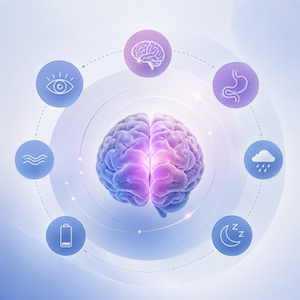
Background: Migraine prodromal symptoms typically emerge 2-48 hours before headache onset and include cognitive, affective, and homeostatic disturbances. Although widely described in the literature, their reported prevalence varies considerably, likely due to methodological differences in symptom assessment. This multicenter observational study aimed to evaluate the prevalence, characteristics, timing, and distribution of prodromal symptoms across migraine subtypes in routine outpatient clinical practice.
Methods: Consecutive adult patients diagnosed with migraine without aura, migraine with aura, or chronic migraine according to the International Classification of Headache Disorders, 3rd edition (ICHD-3) criteria, were enrolled at multiple Italian headache centers between January and June 2025. Patients reporting prodromal symptoms constituted the study group, while those not reporting prodromal symptoms served as controls for prevalence analysis. An interviewer-administered questionnaire assessed symptom type, timing, duration, and recurrence. Descriptive statistics were performed; group differences were evaluated using t-tests and chi-square tests, with significance set at p<0.05.
Results: Among 3,711 migraine patients (mean age 41.3±13.4 years; 86.0% female), 122 (3.3%) reported prodromal symptoms. Prevalence differed significantly across migraine subtypes (χ²=7.67, p=0.02): 3.5% in migraine without aura, 5.3% in migraine with aura, and 2.2% in chronic migraine. The most frequent prodromal manifestations were yawning/asthenia (37.7%), difficulty concentrating (33.6%), anxiety (26.2%), hunger (21.3%), and depressive symptoms (18.9%). Mean prodromal onset occurred 9.9±11.4 hours before headache onset, with a mean duration of 6.3±8.9 hours. Female patients reported significantly longer prodromal duration than males (6.9±9.3 vs. 1.1±1.9 hours; p<0.001). Prodromal symptoms recurred in approximately 30% of attacks within the same patient and remained clinically consistent over time.
Conclusions: In this large outpatient cohort, migraine prodromal symptoms were infrequently reported, particularly in chronic migraine, suggesting substantial underrecognition in routine clinical practice. Prodromal manifestations were more common in episodic migraine and were mainly characterized by non-specific cognitive, affective, and homeostatic symptoms. Their variable recurrence and duration highlight the heterogeneity of the migraine prodrome and support the need for improved recognition to facilitate earlier therapeutic intervention.
Downloads
1. Blau JN. Migraine prodromes separated from the aura: complete migraine. Br Med J 1980;281:658-60. DOI: https://doi.org/10.1136/bmj.281.6241.658
2. Lance JW. What is a migraine? Adv Neurol 1982;33:21-6
3. Waelkens J. Warning symptoms in migraine: characteristics and therapeutic implications. Cephalalgia 1985;5:223-8. DOI: https://doi.org/10.1046/j.1468-2982.1985.0504223.x
4. Amery WK, Waelkens J, Vandenbergh V. Migraine warning. Headache 1986;26:60-6. DOI: https://doi.org/10.1111/j.1526-4610.1986.hed2602060.x
5. Headache Classification Committee of the International Headache Society. The international classification of headache disorders, 2nd edition. Cephalalgia 2004;24:9-160.
6. Headache Classification Committee of the International Headache Society. The international classification of headache disorders, 3rd edition (beta version). Cephalalgia 2013;33:629-808. DOI: https://doi.org/10.1177/0333102413485658
7. Headache Classification Committee of the International Headache Society (IHS) The International Classification of Headache Disorders, 3rd edition. Cephalalgia 2018;38:1-211. DOI: https://doi.org/10.1177/0333102417738202
8. Kelman L. The premonitory symptoms (prodrome): a tertiary care study of 893 migraineurs. Headache 2004;44:865-72. DOI: https://doi.org/10.1111/j.1526-4610.2004.04168.x
9. Rossi P, Ambrosioni A, Buzzi MG. Prodromes and predictors of migraine attack. Funct Neurol 2005;20:185-91.
10. Quintela E, Castillo J, Muñoz P, Pascual J. Premonitory and resolution symptoms in migraine: a prospective study in 100 unselected patients. Cephalalgia 2006;26:1051-60. DOI: https://doi.org/10.1111/j.1468-2982.2006.01157.x
11. Schoonman GG, Evers DJ, Terwindt GM, van Dijk JG, Ferrari MD. The prevalence of premonitory symptoms in migraine: a questionnaire study in 461 patients. Cephalalgia 2006;26:1209-13. DOI: https://doi.org/10.1111/j.1468-2982.2006.01195.x
12. Thuraiaiyah J, Ashina H, Christensen RH, Al-Khazali HM, Wiggers A, Amin FM, et al. Premonitory symptoms in migraine: A REFORM Study. Cephalalgia 2024;44:3331024231223979. DOI: https://doi.org/10.1177/03331024231223979
13. Santoro G, Bernasconi F, Sessa F, Venco A. Premonitory symptoms in migraine without aura: a clinical investigation. Funct Neurol 1990;5:339-44.
14. Giffin NJ, Ruggiero L, Lipton RB, Silberstein SD, Tvedskov JF, Olesen J, et al. Premonitory symptoms in migraine: an electronic diary study. Neurology 2003;60:935-40. DOI: https://doi.org/10.1212/01.WNL.0000052998.58526.A9
15. Karsan N, Bose P, Goadsby PJ. The migraine premonitory phase. Continuum (Minneap Minn) 2018;24:996-1008. DOI: https://doi.org/10.1212/CON.0000000000000624
16. Waelkens J. Domperidone in the prevention of complete classical migraine. Br Med J (Clin Res Ed) 1982;284:944 DOI: https://doi.org/10.1136/bmj.284.6320.944
17. Becker WJ. The premonitory phase of migraine and migraine management. Cephalalgia 2013;33:1117-21. DOI: https://doi.org/10.1177/0333102412437390
18. Luciani R, Carter D, Mannix L, Hemphill M, Diamond M, Cady R. Prevention of migraine during prodrome with naratriptan. Cephalalgia 2000;20:122-6. DOI: https://doi.org/10.1046/j.1468-2982.2000.00030.x
19. Goadsby PJ, Ailani J, Dodick DW, Starling AJ, Liu C, Liu Y, et al. Ubrogepant for the treatment of migraine prodromal symptoms: an exploratory analysis from the randomized phase 3 PRODROME trial. Nat Med 2025;31:2179-85. DOI: https://doi.org/10.1038/s41591-025-03679-7
20. Gao L, Zhao F, Tu Y, Liu K. The prodrome of migraine: mechanistic insights and emerging therapeutic strategies. Front Neurol 2024;15:1496401. DOI: https://doi.org/10.3389/fneur.2024.1496401
21. Vetvik KG, MacGregor EA. Sex differences in the epidemiology, clinical features, and pathophysiology of migraine. Lancet Neurol 2017;16:76-87. DOI: https://doi.org/10.1016/S1474-4422(16)30293-9
22. Pavlović JM, Akcali D, Bolay H, Bernstein C, Maleki N, Hoon A, et al. Sex-related influences in migraine. J Neurosci Res 2017;95:587-93. DOI: https://doi.org/10.1002/jnr.23903
23. Dalla Volta G, Russo A, Silvestro M, Ornello R, Caponnetto V, Sacco S, et al. Exploring the multifaceted characteristics of aura in migraine: A multicenter, cross-sectional study. Cephalalgia 2024;44:3331024241299453. DOI: https://doi.org/10.1177/03331024241299453
24. Dalla Volta G, Zavarise P, Perego L, Savi L, Pezzini A. Comparison of the effect of Tanacetum parthenium, 5-hydroxytryptophan, and magnesium (Aurastop) versus magnesium alone on aura phenomenon and its evolution. Pain Res Manag 2019;2019:6320163. DOI: https://doi.org/10.1155/2019/6320163
25. Zavarise P, Dalla Volta G. A combination of Tanacetum parthenium, Griffonia simplicifolia and magnesium (Aurastop®) as symptomatic acute treatment for migraine aura: a retrospective cohort study. Open Access Libr J 2017;4:e3660. DOI: https://doi.org/10.4236/oalib.1103660
How to Cite

This work is licensed under a Creative Commons Attribution-NonCommercial 4.0 International License.
PAGEPress has chosen to apply the Creative Commons Attribution NonCommercial 4.0 International License (CC BY-NC 4.0) to all manuscripts to be published.