

 https://doi.org/10.4081/cc.2026.15931
Trigeminal ganglion neurons lack detectable GLP-1 receptor expression: a cross-species single-cell transcriptomic study
All claims expressed in this article are solely those of the authors and do not necessarily represent those of their affiliated organizations, or those of the publisher, the editors and the reviewers. Any product that may be evaluated in this article or claim that may be made by its manufacturer is not guaranteed or endorsed by the publisher.
Accepted: 25 September 2026
Published: 16 October 2026
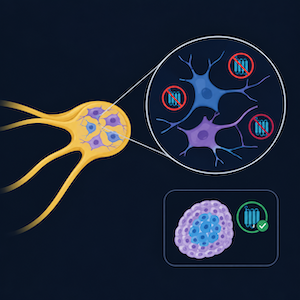
Background: Glucagon-like peptide-1 receptor agonists (GLP-1 RAs) are accumulating signals of potential benefit in headache disorders, but the cellular locus of any anti-cephalalgic action is unknown. A direct effect on the trigeminovascular system would require GLP1R to be expressed by cells of the trigeminal ganglion (TG), and we therefore investigated whether GLP1R is expressed by TG neurons or non-neuronal cells.
Methods: We reanalysed public single-cell/single-nucleus transcriptomic data from mouse and human TG, quantifying GLP1R detection per cell type with exact binomial 95% confidence intervals (CIs). GLP1R and the second incretin receptor GIPR were benchmarked against validated G protein-coupled receptor (GPCR) drug targets and nociceptor markers, and GLP1R detection was verified in pancreatic islets, where it is expressed.
Results: GLP1R was detected in 0.09% of mouse and 0.05% of human trigeminal neurons, whereas validated GPCR drug targets were robustly detected in the same cells. GLP1R was undetected in the peptidergic subtype and ≤0.17% across the other mouse neuronal subtypes, was at the limit of detection in human neurons, and was at or below the limit of detection in all human non-neuronal compartments, while GPCRs and compartment markers labelled their expected populations. The same pipeline detected GLP1R in pancreatic beta cells, confirming assay sensitivity.
Conclusions: Across both mouse and human TG, GLP1R transcripts were not detectably expressed by neurons or non-neuronal cells. The anti-headache signals of GLP-1 RAs are therefore unlikely to be initiated by GLP1R within TG cell bodies and more plausibly reflect extraganglionic mechanisms.
Downloads
Halloum W, Duhem YA, Beier D, Pellesi L. Glucagon-like peptide-1 (GLP-1) receptor agonists for headache and pain disorders: a systematic review. J Headache Pain 2024; 25:112. DOI: https://doi.org/10.1186/s10194-024-01821-3
Mitchell JL, Lyons HS, Walker JK, Yiangou A, Grech O, Alimajstorovic A, et al. The effect of GLP-1RA exenatide on idiopathic intracranial hypertension: a randomized clinical trial. Brain 2023;146:1821-30. DOI: https://doi.org/10.1093/brain/awad003
Botfield HF, Uldall MS, Westgate CSJ, Mitchell JL, Hagen SM, Gonzalez AM, et al. A glucagon-like peptide-1 receptor agonist reduces intracranial pressure in a rat model of hydrocephalus. Sci Transl Med 2017;9:eaan0972. DOI: https://doi.org/10.1126/scitranslmed.aan0972
Braca S, Russo CV, Stornaiuolo A, Cretella G, Miele A, Giannini C, De Simone R. Effectiveness and tolerability of liraglutide as add-on treatment in patients with obesity and high-frequency or chronic migraine: A prospective pilot study. Headache 2025;65:1831-8. DOI: https://doi.org/10.1111/head.14991
Roland N, Sonne H, Pellesi L, Bramming M, Cardél LG, Pottegård A, Kildegaard H. Impact of semaglutide introduction on the use of triptans: an interrupted-time series. J Headache Pain 2026;27:199. DOI: https://doi.org/10.1186/s10194-026-02462-4
Kabahizi A, Wallace B, Lieu L, Chau D, Dong Y, Hwang ES, Williams KW. Glucagon-like peptide-1 (GLP-1) signalling in the brain: From neural circuits and metabolism to therapeutics. Br J Pharmacol 2022;179:600-24. DOI: https://doi.org/10.1111/bph.15682
Kopp KO, Glotfelty EJ, Li Y, Greig NH. Glucagon-like peptide-1 (GLP-1) receptor agonists and neuroinflammation: Implications for neurodegenerative disease treatment. Pharmacol Res 2022;186:106550. DOI: https://doi.org/10.1016/j.phrs.2022.106550
Alvarez E, Martínez MD, Roncero I, Chowen JA, García-Cuartero B, Gispert JD, et al. The expression of GLP-1 receptor mRNA and protein allows the effect of GLP-1 on glucose metabolism in the human hypothalamus and brainstem. J Neurochem 2005;92:798-806. DOI: https://doi.org/10.1111/j.1471-4159.2004.02914.x
Jing F, Zou Q, Wang Y, Cai Z, Tang Y. Activation of microglial GLP-1R in the trigeminal nucleus caudalis suppresses central sensitization of chronic migraine after recurrent nitroglycerin stimulation. J Headache Pain 2021;22:86. DOI: https://doi.org/10.1186/s10194-021-01302-x
Schulte LH, May A. The migraine generator revisited: continuous scanning of the migraine cycle over 30 days and three spontaneous attacks. Brain 2016;139:1987-93. DOI: https://doi.org/10.1093/brain/aww097
Schulte LH, Allers A, May A. Hypothalamus as a mediator of chronic migraine: evidence from high-resolution fMRI. Neurology 2017;88:2011-6. DOI: https://doi.org/10.1212/WNL.0000000000003963
Bigal ME, Lipton RB, Holland PR, Goadsby PJ. Obesity, migraine, and chronic migraine: possible mechanisms of interaction. Neurology 2007;68:1851-61. DOI: https://doi.org/10.1212/01.wnl.0000262045.11646.b1
Westgate CSJ, Israelsen IME, Jensen RH, Eftekhari S. Understanding the link between obesity and headache- with focus on migraine and idiopathic intracranial hypertension. J Headache Pain 2021;22:123. DOI: https://doi.org/10.1186/s10194-021-01337-0
Yang L, Xu M, Bhuiyan SA, Li J, Zhao J, Cohrs RJ, et al. Human and mouse trigeminal ganglia cell atlas implicates multiple cell types in migraine. Neuron 2022;110:1806-21.e8. DOI: https://doi.org/10.1016/j.neuron.2022.03.003
Techameena P, Feng X, Zhang K, Hadjab S. The single-cell transcriptomic atlas iPain identifies senescence of nociceptors as a therapeutical target for chronic pain treatment. Nat Commun 2024;15:8585. DOI: https://doi.org/10.1038/s41467-024-52052-8
The Tabula Muris Consortium. A single-cell transcriptomic atlas characterizes ageing tissues in the mouse. Nature 2020;583:590-5. DOI: https://doi.org/10.1038/s41586-020-2496-1
Muraro MJ, Dharmadhikari G, Grün D, Groen N, Dielen T, Jansen E, et al. A Single-Cell Transcriptome Atlas of the Human Pancreas. Cell Syst 2016;3:385-94.e3. DOI: https://doi.org/10.1016/j.cels.2016.09.002
Wolf FA, Angerer P, Theis FJ. SCANPY: large-scale single-cell gene expression data analysis. Genome Biol 2018; 19:15. DOI: https://doi.org/10.1186/s13059-017-1382-0
Harris CR, Millman KJ, van der Walt SJ, Gommers R, Virtanen P, Cournapeau D, et al. Array programming with NumPy. Nature 2020;585:357-62. DOI: https://doi.org/10.1038/s41586-020-2649-2
Virtanen P, Gommers R, Oliphant TE, Haberland M, Reddy T, Cournapeau D, et al; SciPy 1.0 Contributors. SciPy 1.0: fundamental algorithms for scientific computing in Python. Nat Methods 2020;17:261-72. Erratum in: Nat Methods 2020;17:352. DOI: https://doi.org/10.1038/s41592-020-0772-5
How to Cite

This work is licensed under a Creative Commons Attribution-NonCommercial 4.0 International License.
PAGEPress has chosen to apply the Creative Commons Attribution NonCommercial 4.0 International License (CC BY-NC 4.0) to all manuscripts to be published.